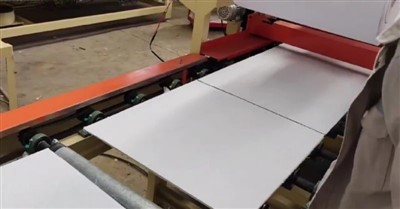

Operating a PVC gypsum tiles laminating and cutting machine requires strict process control. Small deviations in temperature, glue thickness, or blade alignment can lead to product defects. Below are three common troubleshooting scenarios and how to solve them instantly on your shop floor:
Issue 1: Bubbling or Peeling of PVC Film
The Cause: This usually happens when the glue is applied unevenly, the moisture content of the base gypsum board is too high (>2%), or the pressure rollers are loose.
The Solution: First, check the rubber coating roller for any dried glue residue. Second, ensure your infrared drying tunnel is heating evenly to activate the glue properly. Adjust the pneumatic pressure of the laminating rollers to ensure consistent contact across the entire board surface.
Issue 2: Chipped or Rough Edges After Sawing
The Cause: Dull saw blades, incorrect blade height, or vibration in the machine frame during high-speed cutting.
The Solution: Gypsum is highly abrasive to steel. Ensure you use high-quality tungsten carbide-tipped (TCT) saw blades and sharpen them regularly. Check if the heavy-duty frame is anchored securely to the concrete floor to eliminate micro-vibrations.
Issue 3: Inaccurate Finished Dimensions (Out of Squareness)
The Cause: Misalignment between the longitudinal (vertical) and transverse (horizontal) cutting units, or slipping of the feeding conveyor belt.
The Solution: Calibrate the guide rails of the cutting machine using a dial indicator. Check the tension of the synchronous belts and clean any gypsum dust buildup from the rollers.
Pro Maintenance Tip
Establish a daily 15-minute cleaning routine. Gypsum dust is the number one enemy of mechanical bearings and electrical components. A clean machine guarantees a long service life and consistent tile quality.