
In the modern construction and interior decoration industry, PVC laminated gypsum ceiling tiles have become one of the most popular ceiling materials worldwide. Known for being moisture-proof, fire-resistant, easy to clean, and cost-effective, these boards are widely used in offices, shopping malls, hospitals, and residential buildings.
For building material manufacturers looking to scale up production and boost profit margins, investing in an automated gypsum ceiling tile production line for PVC laminated boards is a strategic move. Below is a comprehensive breakdown of how the production line works, its core components, and key factors to consider before purchasing.
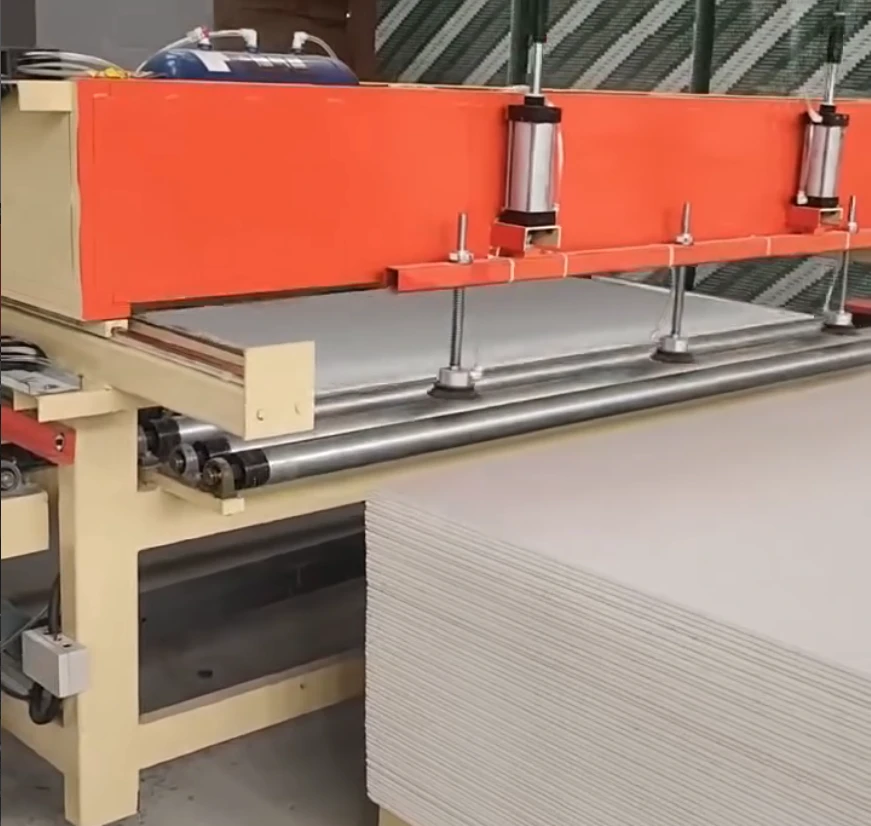
1. Core Workflow of a PVC Gypsum Ceiling Tile Production Line
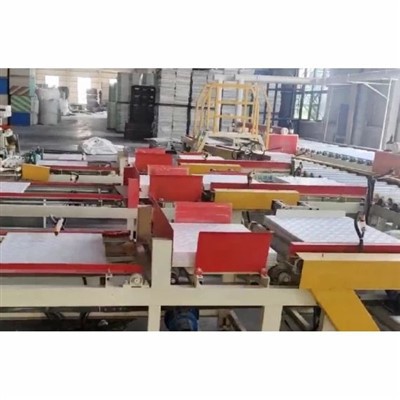
A standard automated production line transforms raw paper-faced gypsum boards into finished, market-ready ceiling tiles through a continuous, high-precision process:
Automatic Board Feeding: Large standard gypsum boards (typically 1200×2400mm) are automatically loaded onto the conveyor system via a vacuum lifter or hydraulic lifting table.
Dust Removal: High-efficiency brushing and air-blowing units clean the board surface to ensure zero dust remains before gluing, preventing bubbles or delamination.
Precision Glue Coating: A roller coating machine applies an even layer of specialized water-based or hot-melt adhesive onto the front face of the gypsum board.
PVC Film & Aluminum Foil Lamination:
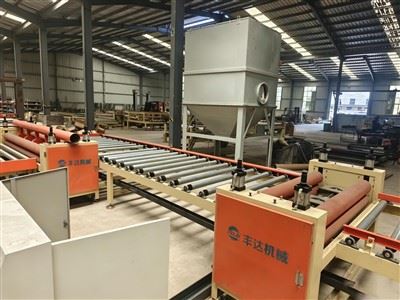
Front Side: Decorative PVC film (available in hundreds of patterns) is pressed onto the glued surface via heavy-duty silicone and steel rollers.
Back Side: Aluminum foil is simultaneously laminated onto the back to provide moisture resistance and thermal insulation.
Automatic Longitudinal & Transverse Cutting: High-speed precision saws cut the laminated large boards into standard ceiling tile sizes (such as 595×595mm, 600×600mm, or 603×603mm) with smooth, burr-free edges.
Edge Sealing (Optional): Automated edge-banding or sealing units protect the exposed gypsum edges from humidity.
Stacking & Shrink Wrapping: Finished tiles are automatically counted, stacked (usually 8–10 pieces per pack), and wrapped in heat-shrink film for safe container shipping.
2. Key Technical Advantages of Modern Production Lines
High Automation & Labor Savings: Controlled by a centralized PLC system with a touchscreen interface, a full line typically requires only 3 to 5 operators per shift.
Superior Bonding Strength: Advanced glue-controlling rollers and pneumatic pressing systems ensure the PVC film and aluminum foil bond tightly without peeling, even in high-humidity tropical climates.
High Cutting Accuracy: Servo-driven cutting systems keep dimensional tolerances within ±0.2mm, ensuring seamless installation into T-bar ceiling grids.
Flexible Size Customization: Quick-adjust cutting blades allow factories to easily switch between metric (595×595mm) and imperial (603×603mm / 2'×2') standards to serve different export markets.
3. What Buyers Should Consider Before Investing
When sourcing a PVC laminated gypsum board production line, factory owners should evaluate the following parameters:
Daily Output Capacity: Entry-level semi-automatic lines produce around 1,500–2,500 sqm per 8-hour shift, while high-speed fully automatic lines can reach 4,000–6,000+ sqm per shift.
Adhesive Compatibility: Ensure the gluing system matches the type of glue locally available in your country (white latex / PVA glue vs. PUR hot melt).
Factory Footprint & Power Supply: Standard lines require a workshop length of 35 to 60 meters and a stable 3-phase industrial power supply.
After-Sales & Spare Parts: Partner with an experienced machinery manufacturer that provides layout design, on-site installation, operator training, and readily available wear parts (cutting blades, rubber rollers).
Conclusion
Upgrading to an automated gypsum ceiling tile production line for PVC laminated boards significantly reduces labor costs, minimizes raw material waste, and ensures consistent product quality for both domestic and export markets.