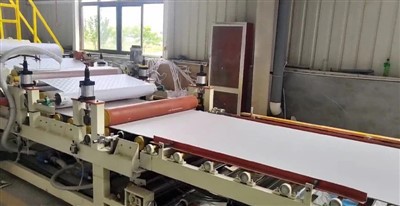


As demand for waterproof, easy-to-clean PVC laminated gypsum ceiling tiles continues to grow across commercial and residential projects, many building material manufacturers are evaluating whether to invest in a semi-automatic setup or a Best Quality Fully Automatic PVC Laminated Gypsum Tiles Machine. Understanding the differences in labor cost, output efficiency, and product consistency is essential for maximizing your return on investment (ROI).
1. Labor Requirements & Operational Efficiency
Semi-Automatic Line:Typically requires 6 to 8 workers to manually feed plasterboards, transfer laminated sheets to cutting tables, apply edge tape, and stack finished tiles. Labor fatigue often leads to inconsistent daily output.
Fully Automatic Line:Integrates vacuum feeding, double-sided lamination, multi-axis cutting, edge banding, and automatic stacking into one synchronized workflow-requiring only 2 to 3 operators to monitor the PLC control panel.
2. Cutting Precision & Edge Quality
In modern T-bar grid ceiling installations, dimensional accuracy is critical. Manual or semi-automatic cutting can cause slight size deviations or paper tearing along the edges. A fully automatic PVC gypsum board laminating and cutting machine uses synchronized servo positioning and high-speed scoring blades to guarantee clean, square 595×595mm or 600×600mm tiles with zero rework.
3. Glue Savings & Lamination Consistency
Uneven adhesive application is the primary cause of PVC film bubbling or corner delamination. Automated precision metering rollers maintain uniform glue thickness across the entire 1220×2440mm board, cutting adhesive waste by 10%–15% while ensuring strong, long-lasting bonding.
4. Which Option Fits Your Business?
Choose Semi-Automatic if you are testing a new local market with limited initial capital and daily demand under 800 sqm.
Choose Fully Automatic if you target wholesale distributors, government/commercial tenders, or export markets requiring 1,500–3,000+ sqm per shift with strict quality consistency.