
For building material manufacturers looking to enter the suspended ceiling market-or expand existing capacity-choosing the right machinery is the single most critical capital decision. A common dilemma buyers face is whether to start with a traditional semi-automatic setup or invest directly in a Fully Automatic T Grid Production Line.
While both systems produce Main Tees, Cross Tees, and Wall Angles, their impact on your daily operating costs, product consistency, and profit margins differs dramatically. Below is an objective comparison to help you make the right investment choice.
1. Production Speed & Daily Output
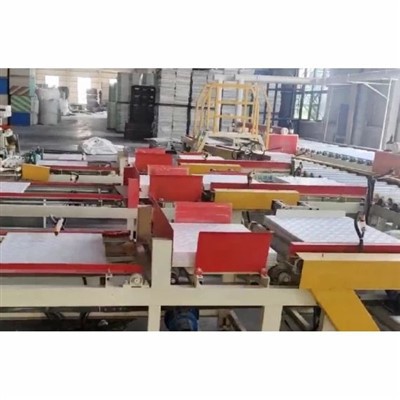
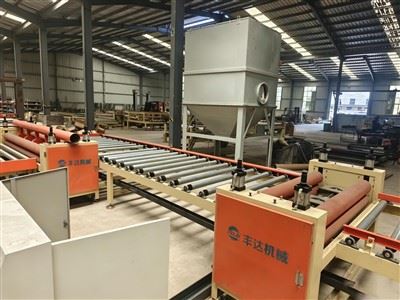
Semi-Automatic Line: Typically runs at 15 to 25 meters per minute. Because punching and cutting often require separate manual stations or slower stop-and-punch cycles, daily output is limited.
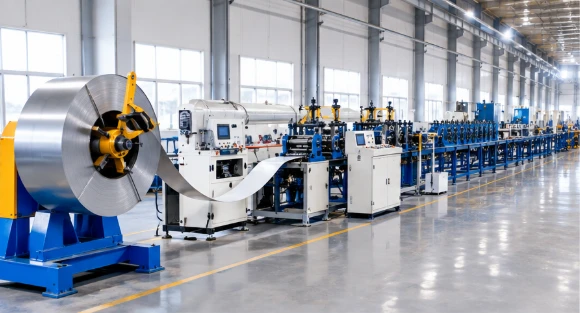
Fully Automatic T Grid Production Line: Utilizes servo flying-shear and continuous rotary/high-speed punching technology, reaching 40 to 60 meters per minute. A single fully automatic line can easily match the output of two to three semi-automatic lines.
2. Labor Requirements & Operating Costs
Semi-Automatic Line: Requires 4 to 6 workers per shift to handle feeding, transferring profiles to separate end-clip punching presses, manual counting, and box packing.
Fully Automatic Line: Integrates decoiling, roll forming, end-clip punching, cutting, and stacking into one continuous flow. Only 1 to 2 operators are needed-cutting labor expenses by over 60% and eliminating human error.
3. Product Precision & Market Competitiveness
Modern commercial contractors demand strict adherence to ASTM C635 or EN 13964 standards.
Manual handling between machines in semi-automatic setups often causes slight bending, surface scratches on the pre-painted capping, or inconsistent tongue alignment.
A Fully Automatic T Grid Production Line processes the steel strip in one clamped, uninterrupted pass. This guarantees ±0.1mm dimensional accuracy, tight interlocking clicks on-site, and zero surface damage.
4. Return on Investment (ROI): When to Upgrade?
While a semi-automatic line has a lower upfront purchase price, a fully automatic line typically achieves a faster ROI within 8 to 14 months for factories running at least one full 8-hour shift daily. The combination of higher daily tonnage, drastically reduced payroll, and lower steel scrap rates quickly offsets the initial investment.
Key Checklist Before Buying Your Production Line
Before requesting a quote from a machinery manufacturer, prepare the following details to get an accurate engineering proposal:
Target Profile Drawings: Specify whether you need 24mm (15/16"), 15mm (9/16"), Flat, Futura, or Silhouette profiles.
Material Thickness: Confirm the gauge of your galvanized base coil and pre-painted capping coil.
Power & Workshop Space: Check your local industrial voltage and ensure at least 25–30 meters of straight floor length.