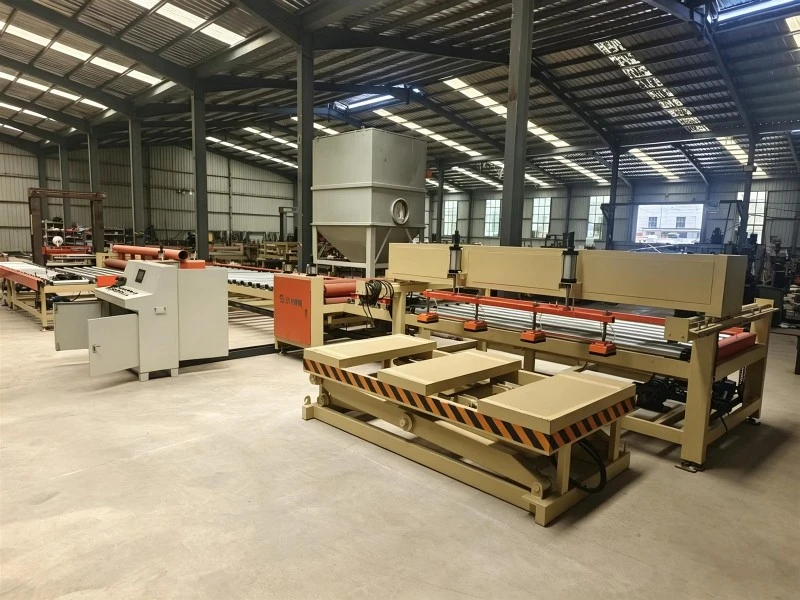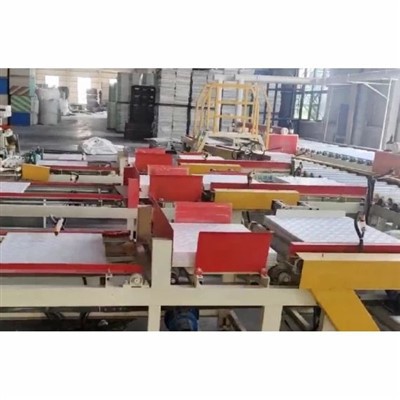

To successfully operate or invest in a commercial-grade gypsum ceiling tile production machinery system, engineering managers must thoroughly understand the sequential mechanical steps involved in the automated processing line. Transforming a raw, large-scale gypsum board into standard 600 by 600mm acoustic or decorative ceiling tiles requires a combination of thermal bonding, precise pneumatic pressure, and ultra-sharp mechanical cutting. Here is a detailed breakdown of the complete technical manufacturing process used in modern automated lines.
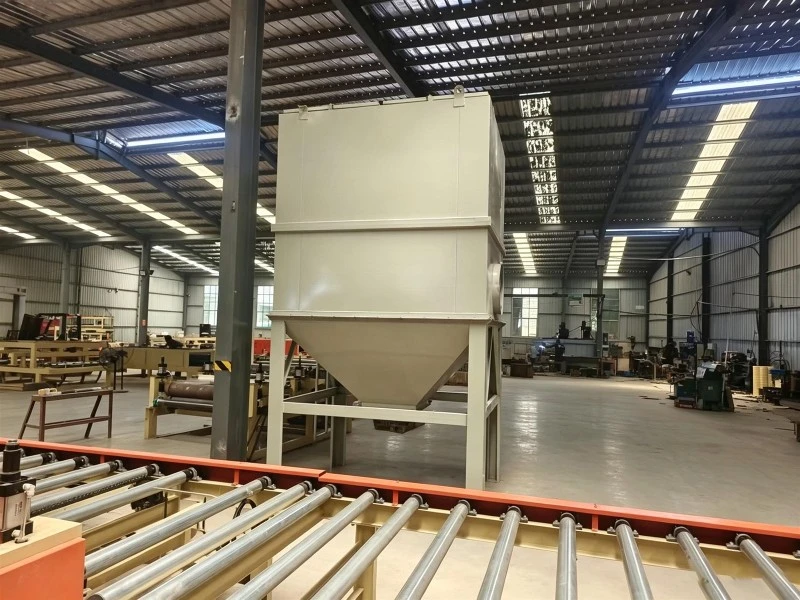
The production cycle begins at the automatic board loading station, where a high-volume vacuum lifting system picks up raw gypsum boards from stacks and places them onto a synchronized roller conveyor. These boards pass through a surface clearing unit equipped with rotating dust brushes and vacuum extractors. This step is critical, as removing all residual white gypsum dust from the plasterboard paper surface is essential to ensure that the adhesive cures perfectly without creating hidden air pockets or surface bumps during the subsequent film lamination stage.
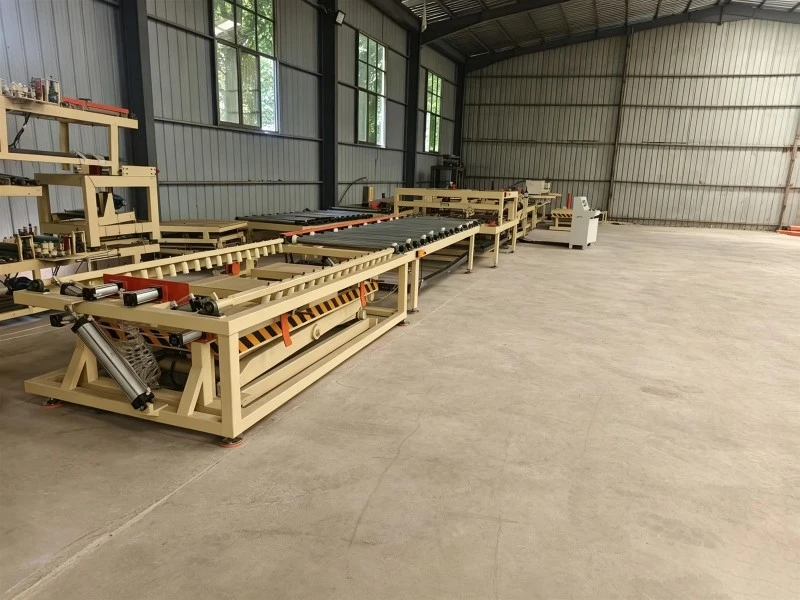
The production cycle begins at the automatic board loading station, where a high-volume vacuum lifting system picks up raw gypsum boards from stacks and places them onto a synchronized roller conveyor. These boards pass through a surface clearing unit equipped with rotating dust brushes and vacuum extractors. This step is critical, as removing all residual white gypsum dust from the plasterboard paper surface is essential to ensure that the adhesive cures perfectly without creating hidden air pockets or surface bumps during the subsequent film lamination stage.
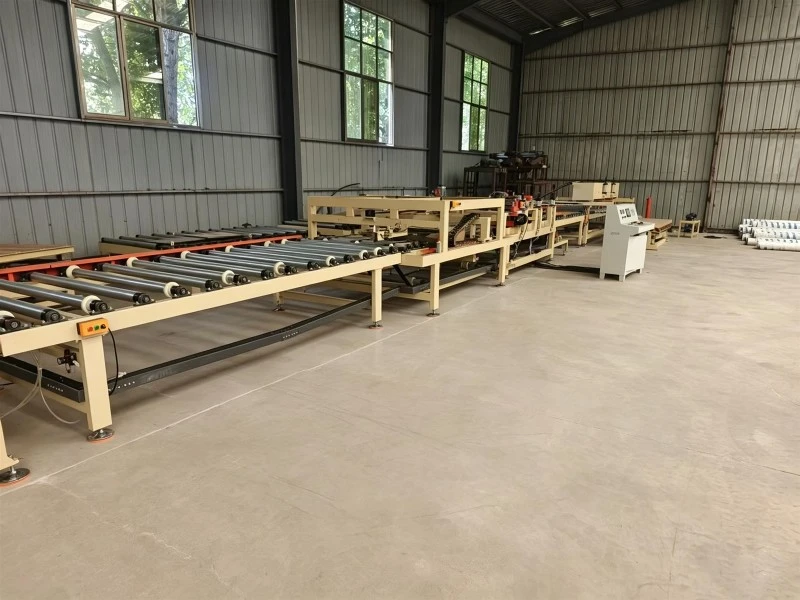
Next, the boards enter the core lamination section of the gypsum board processing line. At this stage, a specialized multi-roller gluing mechanism applies a uniform layer of eco-friendly, heat-resistant water-based adhesive to both the top and bottom surfaces of the moving plasterboard. Simultaneously, a continuous roll of decorative PVC film is unrolled onto the top surface, while a protective anti-moisture aluminum foil sheet is applied to the reverse side. The board then passes through a series of heavy, heated chrome-plated steel rollers that apply steady, calculated pneumatic pressure to securely bond the layers together seamlessly.
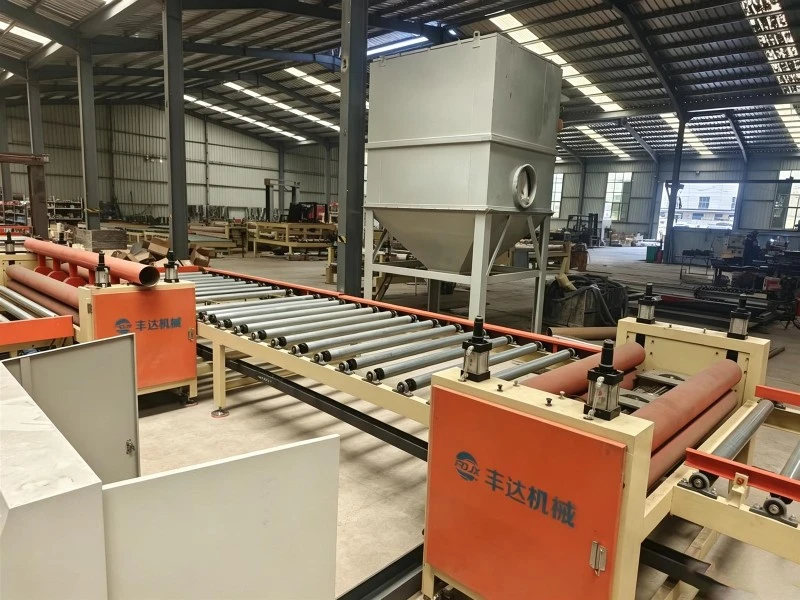
Once the lamination and drying phase is complete, the continuous laminated board moves into the high-speed slicing and sizing section of the pvc gypsum ceiling tile machine. A longitudinal multi-blade cutting machine first trims the long edges and slices the wide board into specific track widths. The boards then automatically change direction on a transfer conveyor to pass through a transverse cross-cutting unit, which slices them into final retail sizes, typically 595 by 595mm or 603 by 603mm. Immediately following the cutting process, the tiles pass through an automatic four-side edge-taping machine that seals the exposed gypsum core with premium PVC tape, preventing future moisture absorption and dust shedding before the final robotic stacker neatly packs the finished ceiling tiles into cartons.