

Hey there! As a supplier of PVC Gypsum Ceiling Production Solution Lines, I often get asked if our lines can produce ceilings with good heat insulation. Well, let's dig into this topic and find out.
First off, let's understand what a PVC gypsum ceiling is. A PVC gypsum ceiling combines the benefits of both PVC (polyvinyl chloride) and gypsum. Gypsum is a well - known material in the construction industry. It's got some natural properties that are pretty cool. For one, it has a certain level of thermal mass. Thermal mass is the ability of a material to absorb and store heat. When the temperature in a room goes up, gypsum can soak up some of that heat, and when the temperature drops, it releases the heat slowly. This helps in maintaining a more stable indoor temperature.
Now, the PVC part. PVC is a synthetic plastic polymer. It's lightweight, durable, and has some insulating properties of its own. When we combine PVC with gypsum in a ceiling production process, we're aiming to create a product that has the best of both worlds.
Our PVC Gypsum Ceiling Production Solution Line is designed to produce high - quality ceilings. The process starts with the raw materials. We carefully select the gypsum and PVC materials to ensure they meet the required standards. The gypsum is usually sourced from high - grade mines, and the PVC is of a quality that provides good flexibility and durability.
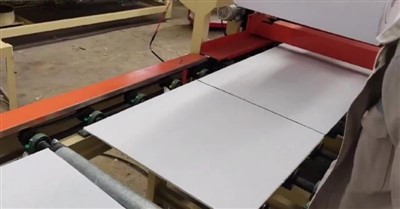
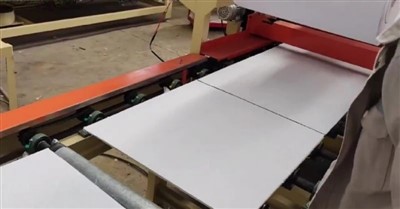
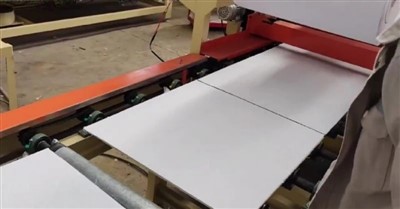
In the production line, the gypsum is first prepared. It's ground into a fine powder and then mixed with water and other additives. These additives can enhance the strength, fire resistance, and other properties of the gypsum. Meanwhile, the PVC is processed into a film or sheet. This PVC layer is then combined with the gypsum layer.
The combination of the PVC and gypsum layers is where the heat - insulation magic happens. The PVC layer acts as a barrier. It can prevent heat transfer through conduction and radiation to some extent. Conduction is when heat moves through a material from a hot area to a cold area. The PVC layer has a relatively low thermal conductivity, which means it doesn't allow heat to pass through it easily. Radiation is when heat is transferred in the form of electromagnetic waves. The PVC layer can reflect some of these heat - carrying waves, reducing the amount of heat that enters or leaves the room.
The gypsum layer, on the other hand, with its thermal mass, stores the heat. So, during the day when the sun heats up the room, the gypsum absorbs the heat. At night, when the outside temperature drops, the gypsum releases the stored heat, keeping the room warm.
Let's talk about some of the products that our production line can make. We have the PVC Film Faced Gypsum Tiles Production Line. This line produces tiles that have a PVC film on the surface of the gypsum. The PVC film not only gives the tiles a nice finish but also adds an extra layer of insulation. The film can be customized in terms of color, pattern, and texture, so you can get a ceiling that looks great and performs well in terms of heat insulation.
Another product is the PVC Gypsum Ceiling Tile Machine. This machine can produce a variety of ceiling tiles. The tiles are made with a combination of PVC and gypsum, and they are designed to fit together easily. The joints between the tiles are also designed to minimize heat leakage.
We also have the PVC Laminated Gypsum Board Plant. This plant produces large - scale gypsum boards with a PVC laminate. The PVC laminate provides a smooth and durable surface, and it also enhances the heat - insulation properties of the boards.
Now, you might be wondering how we test the heat - insulation performance of the ceilings produced by our lines. We use a variety of methods. One common method is the use of a thermal conductivity meter. This device measures how well a material conducts heat. We test samples of the PVC gypsum ceilings to ensure that their thermal conductivity is within the desired range.
We also conduct real - world tests in test rooms. We install the ceilings in these rooms and monitor the temperature changes over time. By comparing the temperature inside the room with the temperature outside, we can get a good idea of how well the ceiling is insulating the room.
There are also some factors that can affect the heat - insulation performance of the PVC gypsum ceilings. The thickness of the gypsum and PVC layers is one factor. Generally, thicker layers provide better insulation. The quality of the materials used also matters. High - quality gypsum and PVC will perform better than lower - quality ones.
The installation of the ceilings is another important factor. If the ceilings are not installed properly, there can be gaps and joints that allow heat to escape. That's why we provide detailed installation instructions and support to our customers.
In conclusion, yes, our PVC Gypsum Ceiling Production Solution Line can produce ceilings with good heat insulation. The combination of PVC and gypsum, along with our advanced production processes, results in ceilings that can effectively regulate the indoor temperature.
If you're in the market for a PVC Gypsum Ceiling Production Solution Line or want to learn more about our products and their heat - insulation capabilities, feel free to reach out. We're here to help you make the best choice for your business. Whether you're a small - scale contractor or a large construction company, we have a solution that can meet your needs.


References:
- Building Materials Handbook: Covers the properties of gypsum and PVC.
- Construction Technology Journal: Contains research on the heat - insulation performance of composite materials.