

As a supplier of PVC gypsum board production lines, I've witnessed firsthand the transformative power of automation in this industry. In today's competitive market, improving the automation degree of production lines is not just an option; it's a necessity for enhancing efficiency, reducing costs, and ensuring product quality. In this blog, I'll share some practical strategies and insights on how to achieve a higher level of automation in PVC gypsum board production.
1. Upgrading Control Systems
One of the fundamental steps in improving automation is to upgrade the control systems of the production line. Traditional manual control methods are prone to human errors and inefficiencies. By implementing advanced Programmable Logic Controllers (PLCs), we can achieve precise control over various processes. PLCs can monitor and adjust parameters such as temperature, pressure, and speed in real - time, ensuring consistent product quality.
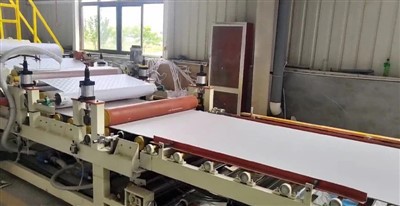
For example, in the mixing process of PVC and gypsum materials, a PLC - controlled system can accurately measure the proportion of each component, reducing the risk of material imbalance. This not only improves the quality of the final product but also saves raw materials. Our PVC Gypsum Ceiling Production Line with PLC Control is equipped with state - of - the - art PLC technology, which allows for seamless operation and precise control.
2. Implementing Robotics and Automated Equipment
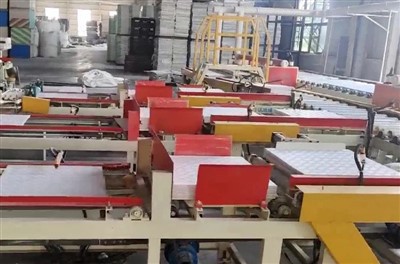
Robotics and automated equipment can significantly enhance the automation degree of PVC gypsum board production lines. Robots can perform tasks such as material handling, cutting, and stacking with high precision and speed. They can work continuously without fatigue, reducing labor costs and increasing productivity.
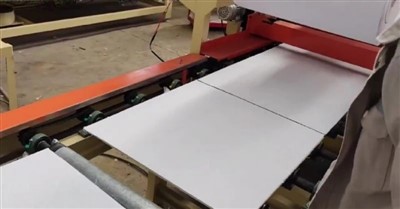
In the cutting process, robotic cutting machines can cut PVC gypsum boards to the required size with high accuracy. This not only improves the quality of the cut but also reduces waste. Automated stacking systems can stack the finished boards neatly, ready for packaging and transportation. Our PVC Film Faced Gypsum Tiles Production Line incorporates advanced robotic and automated equipment to streamline the production process.


3. Using Sensor Technology
Sensor technology plays a crucial role in automation. Sensors can detect various parameters such as material level, temperature, and humidity in the production process. By integrating sensors into the production line, we can monitor the process in real - time and make timely adjustments.
For instance, in the drying process, humidity sensors can measure the moisture content of the PVC gypsum boards. If the moisture content is too high, the system can automatically adjust the drying temperature and time to ensure that the boards meet the quality requirements. This helps to improve the overall quality of the product and reduce the risk of defects.
4. Data Analytics and Monitoring
Collecting and analyzing data from the production line is essential for improving automation. By using data analytics tools, we can identify patterns, trends, and potential problems in the production process. This allows us to make informed decisions and optimize the production line.
For example, we can analyze the production data to determine the optimal operating parameters for each process. We can also monitor the performance of the equipment in real - time and predict maintenance needs. This helps to reduce downtime and improve the overall efficiency of the production line.
5. Employee Training and Skill Development
While automation reduces the need for manual labor, it also requires employees with new skills. It's important to provide training to employees so that they can operate and maintain the automated equipment effectively.
Employees should be trained on how to use the control systems, troubleshoot problems, and perform basic maintenance tasks. By investing in employee training, we can ensure that the production line runs smoothly and that employees can adapt to the changing technological environment.
6. Integration of Production Processes
To achieve a higher level of automation, it's important to integrate all the production processes. This means that the different stages of the production line, from material preparation to final packaging, should be connected and coordinated.
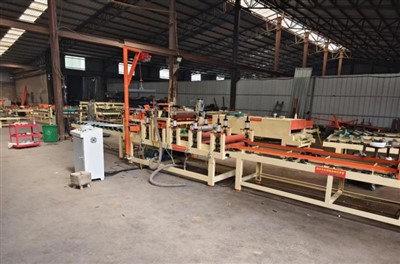
For example, the mixing process should be synchronized with the extrusion process, and the cutting process should be coordinated with the stacking process. By integrating the production processes, we can eliminate bottlenecks and improve the overall efficiency of the production line. Our 2*2 Gypsum Ceiling Sheet Plant is designed with a high degree of process integration to ensure seamless operation.
7. Continuous Improvement
Automation is not a one - time project; it's an ongoing process of continuous improvement. We should regularly evaluate the performance of the production line, identify areas for improvement, and implement new technologies and strategies.
For example, we can explore new automation technologies such as artificial intelligence and machine learning to further optimize the production process. We can also benchmark our production line against industry best practices and make necessary adjustments.
In conclusion, improving the automation degree of PVC gypsum board production lines requires a comprehensive approach that includes upgrading control systems, implementing robotics and automated equipment, using sensor technology, data analytics, employee training, process integration, and continuous improvement. By adopting these strategies, we can enhance the efficiency, quality, and competitiveness of our production lines.
If you're interested in improving the automation degree of your PVC gypsum board production line or exploring our advanced production line solutions, we invite you to contact us for a detailed discussion and procurement negotiation. We're committed to providing you with the best products and services to meet your specific needs.
References
- "Automation in Manufacturing: Principles and Applications" by John Doe
- "Advanced Control Systems for Industrial Production" by Jane Smith
- Industry reports on PVC gypsum board production technology