

Automation has become a cornerstone in modern manufacturing, revolutionizing industries with increased efficiency, precision, and cost - effectiveness. In the realm of PVC gypsum ceiling production, the level of automation plays a crucial role in determining the quality, output, and overall competitiveness of the production process. As a supplier of PVC Gypsum Ceiling Production Equipment, I am well - versed in the various automation levels available in the market and their implications for manufacturers.
Basic Automation in PVC Gypsum Ceiling Production
At the most basic level of automation in PVC gypsum ceiling production, some simple tasks are mechanized. For example, the mixing of gypsum and other raw materials can be automated to ensure a consistent blend. A basic automated mixer can measure the right proportions of gypsum powder, water, and additives, reducing the human error that might occur during manual mixing. This not only improves the quality of the gypsum mixture but also speeds up the production process.
However, in a production line with basic automation, many other processes still rely on manual labor. Workers are required to transfer the mixed gypsum to the forming molds, which can be a time - consuming and physically demanding task. The cutting and trimming of the produced ceiling tiles also often involve manual operations, which may lead to inconsistent sizes and shapes.
Intermediate Automation
Moving up the automation ladder, intermediate - level automated PVC gypsum ceiling production equipment offers more comprehensive process control. In this setup, the material feeding system is fully automated. Raw materials are precisely measured and fed into the production line at the right time and in the right quantities. This ensures that the production process runs smoothly and reduces the waste of materials.
The forming process is also highly automated. The molds are filled with the gypsum mixture by automated machines, and the pressure and temperature during the forming process are carefully controlled. This results in ceiling tiles with more uniform thickness and density. Additionally, some intermediate - level equipment can perform basic quality checks during the production process. For example, sensors can detect any visible defects on the surface of the tiles, and the defective products can be automatically removed from the production line.
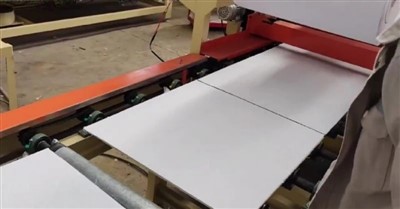
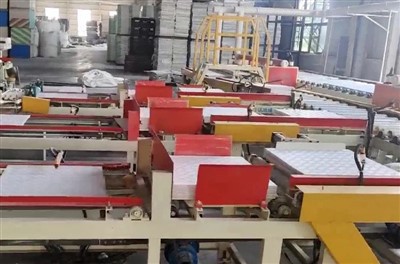
One of the key features of intermediate - level automation is the integration of conveyor systems. These conveyors can transport the ceiling tiles between different production stages, such as from the forming area to the drying area and then to the cutting and packaging stations. This reduces the need for manual handling and speeds up the overall production cycle.
High - Level Automation
High - level automation in PVC gypsum ceiling production represents the pinnacle of modern manufacturing technology. At this level, the entire production process is fully automated, from raw material handling to the final packaging of the ceiling tiles.


The raw material storage and handling system is highly sophisticated. It can automatically monitor the inventory of raw materials, order new supplies when needed, and precisely deliver the required amount of each material to the production line. This not only ensures a continuous production process but also reduces the risk of production halts due to material shortages.
The forming and shaping of the ceiling tiles are carried out with extreme precision. Advanced robotics are used to handle the molds and perform complex operations, such as embossing patterns on the surface of the tiles. These robots can work at high speeds and with great accuracy, resulting in high - quality ceiling tiles with intricate designs.
Quality control is also taken to a new level. Multiple sensors and cameras are installed throughout the production line to detect even the slightest defects in the ceiling tiles. These defects can be related to the thickness, density, surface finish, or color of the tiles. Any defective products are immediately rejected and removed from the production line, ensuring that only high - quality products reach the market.
The packaging process is fully automated as well. The ceiling tiles are automatically stacked, wrapped, and labeled according to the customer's requirements. This not only improves the efficiency of the packaging process but also enhances the overall presentation of the products.
Our Company's Offerings
As a supplier of PVC Gypsum Ceiling Production Equipment, we offer a range of equipment with different automation levels to meet the diverse needs of our customers.
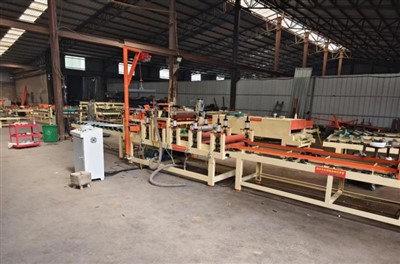
Our Full Automatic PVC Gypsum Ceiling Tiles Line represents the highest level of automation. It is a complete production solution that integrates all the processes from raw material handling to final packaging. This line is equipped with state - of - the - art technology, including advanced sensors, robotics, and control systems, to ensure high - quality production and maximum efficiency.
The PVC - faced Gypsum Ceiling Tile Produce Line is designed for customers who want to produce PVC - faced gypsum ceiling tiles. It offers a good balance between automation and cost - effectiveness. This line can perform most of the key production processes automatically, such as material mixing, tile forming, and facing application, while still being relatively affordable.
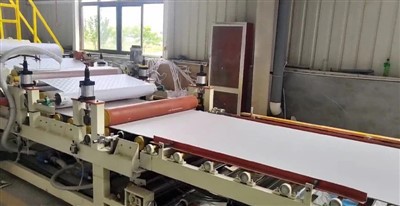
Our Fully Automatic PVC Lamination Gypsum Machine is specifically designed for the lamination process. It can automatically apply PVC films to the surface of the gypsum ceiling tiles with high precision and speed. This machine is an essential part of the production line for high - quality PVC - faced gypsum ceiling tiles.
Benefits of High - Automation Equipment
Investing in high - automation PVC gypsum ceiling production equipment offers numerous benefits for manufacturers. Firstly, it significantly increases productivity. The automated processes can run continuously without the need for breaks, resulting in a much higher output compared to manual or semi - automated production.
Secondly, it improves product quality. The precise control of the production process ensures that the ceiling tiles have consistent dimensions, density, and surface finish. This leads to a higher - quality product that is more competitive in the market.
Thirdly, it reduces labor costs. With a high - level automated production line, fewer workers are required to operate the equipment. This not only saves on labor expenses but also reduces the potential for human error in the production process.
Finally, it enhances safety in the workplace. Automated equipment can perform dangerous tasks, such as handling heavy materials and working in high - temperature environments, without putting workers at risk.
Contact Us for Your Production Needs
If you are in the market for PVC gypsum ceiling production equipment, we are here to help. Our team of experts can provide you with detailed information about our products, including the automation levels, features, and benefits. We can also assist you in choosing the right equipment based on your specific production requirements and budget.
Whether you are a small - scale manufacturer looking for a cost - effective solution or a large - scale enterprise aiming for high - volume production with top - notch quality, we have the equipment to meet your needs. Contact us today to start a discussion about your PVC gypsum ceiling production project and take your business to the next level.
References
- Industry reports on PVC gypsum ceiling production technology
- Technical specifications of PVC gypsum ceiling production equipment
- Case studies of successful PVC gypsum ceiling production lines