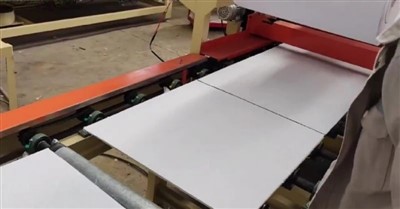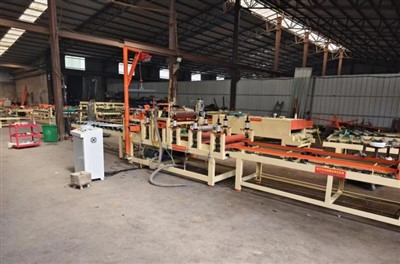


As a supplier of PVC Film Faced Gypsum Tiles Production Line, I'm often asked about the drying process of PVC Film Faced Gypsum Tiles on the production line. In this blog, I'll delve into the details of this crucial process, explaining its significance, steps, and the equipment involved.
Significance of the Drying Process
The drying process is a vital stage in the production of PVC Film Faced Gypsum Tiles. Gypsum, the main raw material for these tiles, contains a significant amount of water when initially mixed and formed. If this water is not properly removed, it can lead to several issues. Firstly, excessive moisture can cause the tiles to warp or deform over time, affecting their aesthetic appeal and structural integrity. Secondly, it can create an environment conducive to the growth of mold and mildew, which not only spoils the appearance of the tiles but also poses health risks. Therefore, a well - executed drying process is essential to ensure the quality and durability of the PVC Film Faced Gypsum Tiles.
Steps in the Drying Process
1. Initial Setting
Before the drying process begins, the gypsum mixture is first poured into molds and allowed to set. This initial setting is a chemical reaction where the gypsum hydrates and forms a solid structure. During this stage, a significant portion of the free water in the mixture is used up in the hydration process. The setting time can vary depending on factors such as the type of gypsum, the temperature, and the presence of additives. Typically, it takes a few minutes to an hour for the gypsum to reach an initial set.


2. Pre - Drying
Once the gypsum has set, the tiles are removed from the molds and transferred to a pre - drying area. In this area, the tiles are exposed to ambient air or a gentle flow of warm air. The purpose of pre - drying is to remove the surface moisture and start the process of reducing the internal moisture content. This step is crucial as it helps to prevent the formation of cracks on the surface of the tiles during the subsequent high - temperature drying stage. Pre - drying can take several hours, depending on the thickness of the tiles and the environmental conditions.
3. Main Drying
After pre - drying, the tiles are moved to a drying chamber. The drying chamber is a specialized equipment that provides a controlled environment for the removal of moisture from the tiles. Inside the chamber, the temperature and humidity are carefully regulated. The temperature is usually set between 40°C and 80°C, depending on the type of gypsum and the desired drying rate. Higher temperatures can speed up the drying process, but they also increase the risk of cracking and other quality issues.
The drying chamber can use different heating methods, such as hot air circulation, infrared heating, or a combination of both. Hot air circulation is the most common method, where hot air is blown over the tiles to carry away the moisture. Infrared heating, on the other hand, directly heats the tiles, which can be more energy - efficient and provide a more uniform drying effect.
During the main drying stage, the moisture content of the tiles gradually decreases. The drying time can range from several hours to a few days, depending on the size and thickness of the tiles. It is important to monitor the moisture content continuously to ensure that the tiles are dried to the desired level.
4. Cooling
Once the tiles have reached the desired moisture content, they are removed from the drying chamber and allowed to cool. Cooling is an important step as it helps to stabilize the structure of the tiles and prevent thermal stress. The tiles are usually placed in a well - ventilated area to cool naturally. This process can take a few hours, depending on the temperature of the tiles and the ambient conditions.
Equipment Involved in the Drying Process
1. Drying Chambers
As mentioned earlier, drying chambers are the key equipment in the drying process. They come in different sizes and designs, depending on the production capacity of the PVC Film Faced Gypsum Tiles Production Line. Some drying chambers are equipped with advanced control systems that can automatically adjust the temperature, humidity, and air circulation based on the moisture content of the tiles.
2. Conveyor Systems
Conveyor systems are used to transport the tiles through the different stages of the drying process. They ensure a smooth and continuous flow of tiles, which is essential for efficient production. The conveyor systems can be customized to fit the specific requirements of the production line, such as the speed, width, and length.
3. Moisture Sensors
Moisture sensors are used to monitor the moisture content of the tiles during the drying process. They provide real - time data, which allows the operators to adjust the drying parameters accordingly. This helps to ensure that the tiles are dried to the optimal moisture level, which is usually around 0.5% to 1%.
Role of Our Production Line in the Drying Process
Our PVC Film Faced Gypsum Tiles Production Line is designed to provide a highly efficient and reliable drying process. The drying chambers in our production line are equipped with state - of - the - art technology, which ensures precise control of temperature and humidity. The conveyor systems are designed to minimize the handling of the tiles, reducing the risk of damage. And the moisture sensors provide accurate and timely data, allowing for optimal drying conditions.
If you are interested in our PVC Film Faced Gypsum Tiles Production Line, you may also be interested in our Automatic PVC Gypsum Ceiling Lamination Machine and PVC Laminated Gypsum Board Machine. These machines are an integral part of the production process and can enhance the overall quality and efficiency of your production.
Conclusion
The drying process of PVC Film Faced Gypsum Tiles on the production line is a complex but crucial stage that determines the quality and durability of the final product. By understanding the steps involved and the equipment used, you can ensure that your production line operates efficiently and produces high - quality tiles. If you are in the market for a PVC Film Faced Gypsum Tiles Production Line, we invite you to contact us for a detailed discussion on how our solutions can meet your specific needs. We are committed to providing you with the best equipment and support to help you succeed in your business.
References
- ASTM C1396/C1396M - 18, Standard Specification for Gypsum Board.
- EN 520:2004, Gypsum plasterboards - Definitions, requirements and test methods.