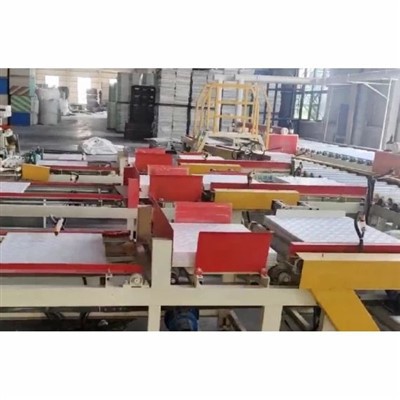


As a supplier of PVC laminated cement lines, I've often been asked about the expansion and contraction rate of PVC laminated cement lines. This is a crucial aspect that affects the performance, durability, and overall quality of the products made using these lines. In this blog post, I'll delve into the details of the expansion and contraction rate of PVC laminated cement lines, exploring the factors that influence it and its implications for various applications.
Understanding Expansion and Contraction
Before we discuss the specific expansion and contraction rate of PVC laminated cement lines, it's important to understand the basic concepts of expansion and contraction. All materials expand when heated and contract when cooled. This is due to the increase or decrease in the kinetic energy of the molecules within the material. When a material is heated, the molecules move more vigorously, causing the material to expand. Conversely, when a material is cooled, the molecules move less, resulting in contraction.
The expansion and contraction rate of a material is typically measured in terms of its coefficient of thermal expansion (CTE). The CTE is defined as the fractional change in length or volume of a material per degree change in temperature. It is expressed in units of per degree Celsius (°C⁻¹) or per degree Fahrenheit (°F⁻¹). A higher CTE indicates that a material will expand or contract more for a given change in temperature.
Expansion and Contraction Rate of PVC Laminated Cement Lines
PVC laminated cement lines are composed of two main components: PVC (polyvinyl chloride) and cement. Each of these materials has its own unique CTE, which contributes to the overall expansion and contraction rate of the PVC laminated cement line.
- PVC: PVC is a thermoplastic polymer with a relatively high CTE. The CTE of PVC typically ranges from 70 to 200 x 10⁻⁶ °C⁻¹, depending on the specific formulation and processing conditions. This means that PVC will expand or contract significantly with changes in temperature.
- Cement: Cement is a hydraulic binder that hardens when mixed with water. It has a much lower CTE compared to PVC, typically ranging from 10 to 20 x 10⁻⁶ °C⁻¹. Cement is more stable and less prone to expansion and contraction with temperature changes.
When PVC is laminated onto cement, the resulting PVC laminated cement line has an expansion and contraction rate that is a combination of the CTEs of PVC and cement. The exact rate depends on the thickness and ratio of the PVC layer to the cement layer, as well as the bonding strength between the two materials.
Factors Affecting the Expansion and Contraction Rate
Several factors can influence the expansion and contraction rate of PVC laminated cement lines:
- Temperature Range: The greater the temperature range to which the PVC laminated cement line is exposed, the more significant the expansion and contraction will be. Extreme temperatures can cause the PVC to expand or contract more rapidly, potentially leading to delamination or other structural issues.
- Humidity: Humidity can also affect the expansion and contraction rate of PVC laminated cement lines. PVC is a hygroscopic material, meaning it can absorb moisture from the air. When PVC absorbs moisture, it can expand, which can cause the PVC laminated cement line to warp or buckle.
- Thickness and Ratio of Layers: The thickness and ratio of the PVC layer to the cement layer can have a significant impact on the expansion and contraction rate. A thicker PVC layer will generally result in a higher expansion and contraction rate, while a thicker cement layer will provide more stability and reduce the overall rate of expansion and contraction.
- Bonding Strength: The bonding strength between the PVC layer and the cement layer is crucial for ensuring the integrity of the PVC laminated cement line. A strong bond will help to minimize the effects of expansion and contraction, preventing delamination and other issues.
Implications for Applications
The expansion and contraction rate of PVC laminated cement lines has several implications for various applications:
- Construction: In construction applications, such as ceiling tiles and wall panels, the expansion and contraction rate of PVC laminated cement lines must be carefully considered. If the expansion and contraction rate is too high, it can cause the tiles or panels to warp, buckle, or delaminate over time. This can lead to aesthetic issues, as well as structural problems.
- Interior Design: PVC laminated cement lines are often used in interior design applications to create a smooth, durable, and aesthetically pleasing surface. However, the expansion and contraction rate can affect the appearance of the finished product. For example, if the PVC laminated cement line expands or contracts unevenly, it can cause visible gaps or cracks between the tiles or panels.
- Outdoor Applications: In outdoor applications, such as signage and cladding, the expansion and contraction rate of PVC laminated cement lines is even more critical. Outdoor environments are exposed to a wider range of temperatures and humidity levels, which can cause the PVC laminated cement line to expand and contract more significantly. This can lead to premature aging, cracking, and other damage.
Controlling the Expansion and Contraction Rate
To minimize the effects of expansion and contraction, several measures can be taken:
- Proper Installation: Proper installation is crucial for ensuring the stability and durability of PVC laminated cement lines. This includes following the manufacturer's installation instructions, using the correct adhesives and fasteners, and allowing for sufficient expansion and contraction space.
- Temperature and Humidity Control: Controlling the temperature and humidity levels in the environment where the PVC laminated cement line is installed can help to reduce the expansion and contraction rate. This can be achieved through the use of heating, ventilation, and air conditioning (HVAC) systems, as well as proper insulation.
- Selection of Materials: Choosing the right materials for the PVC laminated cement line can also help to control the expansion and contraction rate. This includes selecting a PVC with a lower CTE and a cement with a higher strength and stability.
Conclusion
In conclusion, the expansion and contraction rate of PVC laminated cement lines is an important factor that affects the performance, durability, and overall quality of the products made using these lines. By understanding the factors that influence the expansion and contraction rate and taking appropriate measures to control it, we can ensure that our PVC laminated cement lines meet the highest standards of quality and performance.
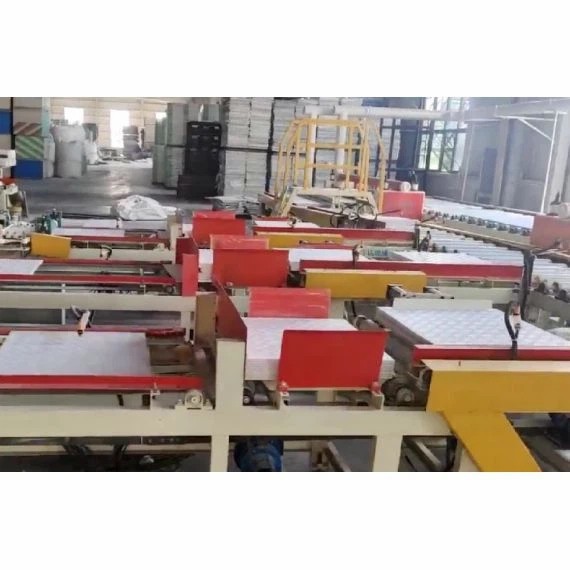
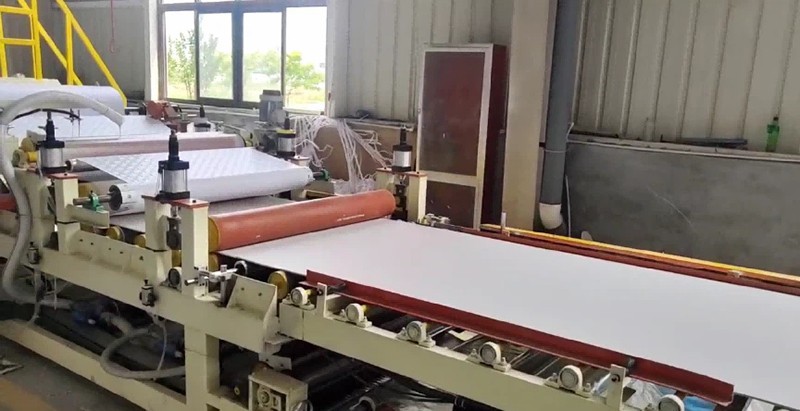
If you're interested in learning more about our PVC laminated cement lines or any of our other products, such as PVC Gypsum Ceiling Tile Production Equipment, PVC Gypsum Or Cement Ceiling Tile Production Line, 595 *595 PVC Gypsum Ceiling Produce Machine, 600 *600 PVC Gypsum Ceiling Production Line, or Plasterboard PVC Gypsum Lamination Line, please feel free to contact us to discuss your specific requirements and explore potential procurement opportunities.
References
- ASTM International. (2021). Standard Test Method for Linear Thermal Expansion of Rigid Solids. ASTM E831 - 20.
- National Institute of Standards and Technology (NIST). (2021). Handbook 130: Uniform Laws and Regulations in the Areas of Legal Metrology and Engineered Products.
- Plastic Pipe Institute (PPI). (2021). Technical Report TR - 3: Design of Plastic Pipe Systems.