

Hey there! As a supplier of PVC Laminated Cement Line, I'm super excited to walk you through the manufacturing process of this awesome product. So, let's dive right in!
Raw Material Preparation
The first step in making PVC laminated cement line is getting all the raw materials ready. We need cement, which is the base of our product. It provides the strength and durability. Along with cement, we also use PVC resin. PVC is great because it gives the product a smooth finish and adds some flexibility.
We also add some additives to the mix. These additives can improve the workability of the cement, make it more resistant to water, and enhance its overall performance. For example, we might use a water - reducing agent to make the cement easier to work with and reduce the amount of water needed in the mix.
Mixing
Once we have all the raw materials, it's time to mix them together. We use a large mixer to ensure that all the ingredients are evenly distributed. This is a crucial step because if the mix isn't uniform, the final product won't have consistent quality.
We start by adding the cement to the mixer. Then, we slowly add the PVC resin and the additives. The mixer runs for a certain period of time, usually a few minutes, until everything is well - blended. During this process, we monitor the temperature and the consistency of the mix to make sure it's just right.
Extrusion
After the mixing is done, the next step is extrusion. We feed the mixed material into an extruder. The extruder is a machine that forces the material through a die, which gives the product its shape. In the case of PVC laminated cement line, the die is designed to create a long, thin line with a specific cross - section.
The extruder heats the material to a certain temperature to make it more malleable. As the material passes through the die, it takes on the shape of the die and comes out as a continuous line. This line is then cooled down quickly to set its shape.
Lamination
Now comes the lamination part. We take the extruded cement line and laminate it with a PVC film. The PVC film not only gives the product a nice appearance but also provides an extra layer of protection.


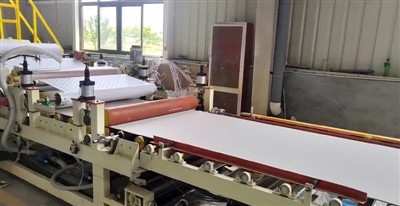
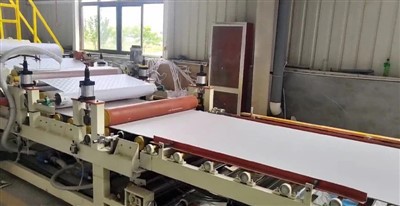
There are different ways to laminate the PVC film onto the cement line. One common method is to use heat and pressure. We pass the cement line and the PVC film through a laminating machine. The machine applies heat and pressure to bond the film to the cement line.
Another method is to use an adhesive. We apply the adhesive to either the cement line or the PVC film and then press them together. This method is useful when we need a stronger bond between the two materials.
Cutting and Finishing
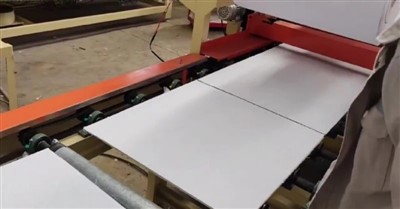
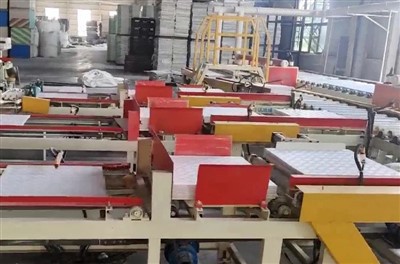
Once the lamination is complete, we cut the long cement line into the desired lengths. We use a cutting machine to make precise cuts. After cutting, we check the quality of the product. We look for any defects, such as cracks or uneven lamination.
If there are any defects, we either repair them or discard the defective pieces. Then, we do some finishing touches. This might include sanding the edges to make them smooth or adding some markings to the product.
Quality Control
Quality control is an important part of the manufacturing process. We have a team of quality control experts who check the product at every stage of production. They use various tools and techniques to ensure that the product meets our high standards.
For example, they might use a hardness tester to check the hardness of the cement line. They also check the thickness of the PVC film and the adhesion between the film and the cement line. If any product doesn't meet the standards, it's sent back for re - work or discarded.
Packaging
After the product passes the quality control checks, it's time to package it. We use high - quality packaging materials to protect the product during transportation and storage. The packaging usually includes a plastic wrapper or a cardboard box.
We label the packaging with important information, such as the product name, size, and usage instructions. This helps our customers to easily identify and use the product.
Why Choose Our PVC Laminated Cement Line
Our PVC laminated cement line has many advantages. First of all, it's very durable. The combination of cement and PVC makes it resistant to wear and tear, as well as to water and chemicals.
It also has a great appearance. The PVC film gives it a smooth and shiny finish, which can enhance the aesthetic appeal of any project. Whether you're using it for construction, decoration, or other purposes, our product will look great.
Moreover, our manufacturing process is highly efficient. We use advanced technology and equipment to ensure that we can produce high - quality products in large quantities. This means that we can offer competitive prices to our customers.
Related Products
If you're interested in other related products, we also have 2*2 Gypsum Ceiling Sheet Plant and PVC Gypsum Ceiling Production Equipment. These products are also made with high - quality materials and advanced manufacturing processes.
We also have PVC Laminated Gypsum Board Machine, which can be used to produce PVC laminated gypsum boards. These machines are designed to be easy to operate and maintain, and they can help you produce high - quality products.
Contact Us for Purchase
If you're interested in our PVC Laminated Cement Line or any of our other products, don't hesitate to contact us. We're always ready to answer your questions and discuss your specific needs. Whether you're a small - scale contractor or a large - scale construction company, we can provide you with the products and services you need.
Let's work together to create great projects!
References
- Cement Handbook: A comprehensive guide to cement manufacturing and properties.
- PVC Technology: An in - depth look at the production and applications of PVC.
- Manufacturing Processes for Construction Materials: A textbook on the manufacturing processes of various construction materials.