
With the continuous development of the construction industry, fiber cement ceiling tiles are increasingly used in commercial buildings, offices, schools, hospitals, and other construction projects. As demand for durable and reliable ceiling materials grows, manufacturers are looking for efficient production equipment to meet different market requirements.
A Fiber Cement Ceiling Tile Production Line provides an equipment solution for manufacturers planning to establish a new factory or upgrade an existing production facility
1. Overview of the Fiber Cement Ceiling Tile Production Line
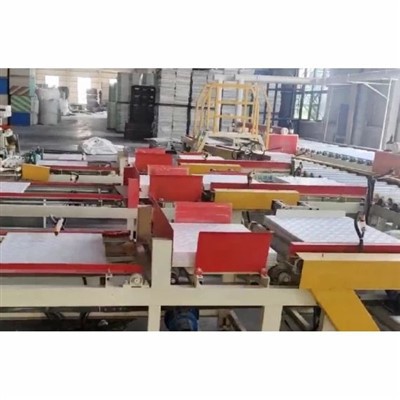
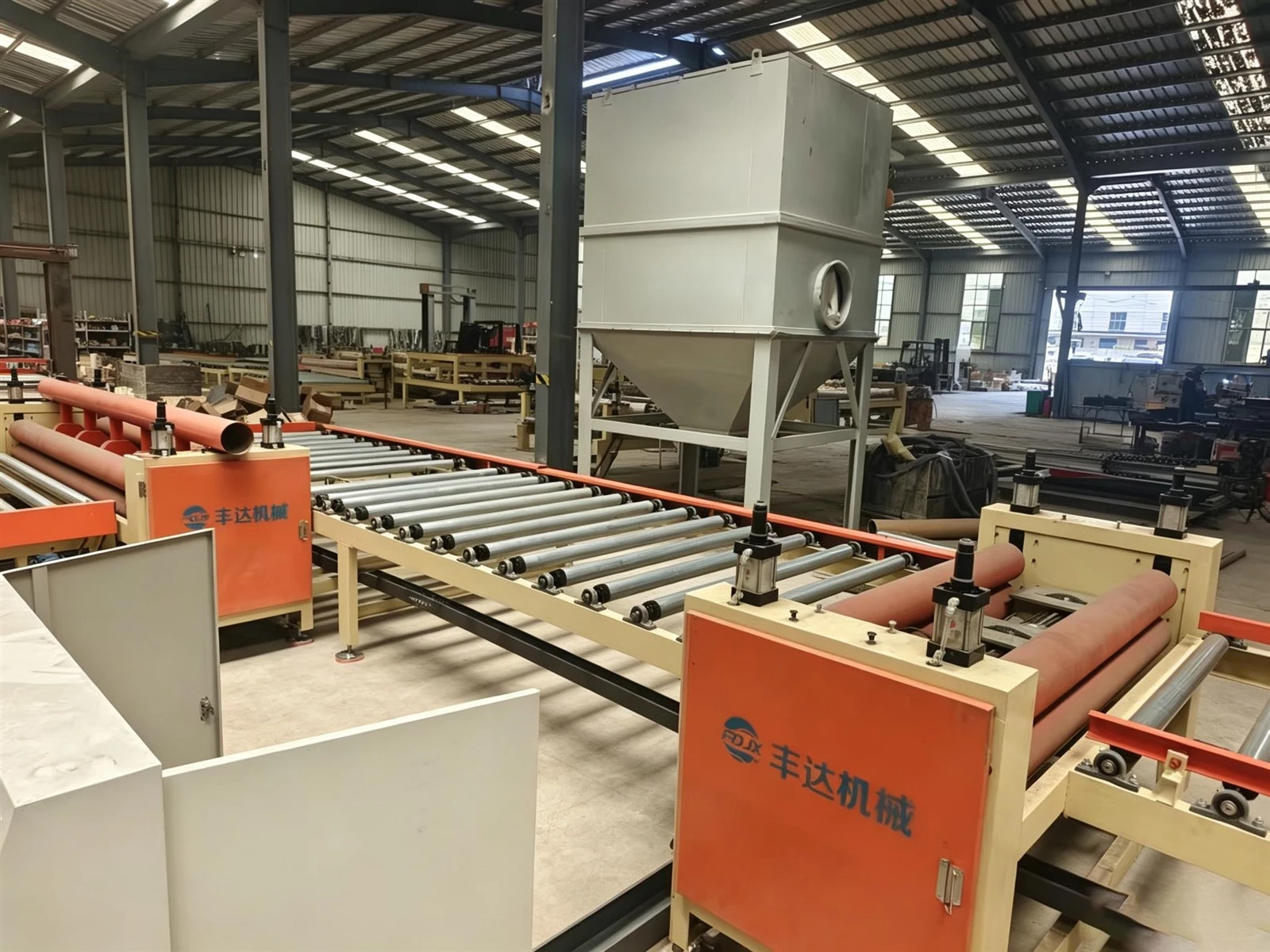
The Fiber Cement Ceiling Tile Production Line is designed for manufacturing fiber cement ceiling boards and tiles in different specifications. Depending on the selected manufacturing technology, the production line may include material preparation, mixing, forming, pressing, cutting, curing, and finishing equipment.
Each production process plays an important role in determining the dimensions, surface quality, and consistency of the finished boards. The equipment configuration should be selected according to the raw materials, product specifications, required production capacity, and factory conditions.
2. Main Features of the Production Line
Customized Equipment Configuration
Different manufacturers have different production targets. Equipment configuration can be planned according to the required board thickness, dimensions, production output, and available factory space.
Efficient Manufacturing Process
A properly designed production line coordinates the main manufacturing processes to support continuous and organized production. The actual automation level depends on the selected machinery and production technology.
Consistent Product Specifications
Suitable process control and equipment adjustment help manufacturers maintain consistent board dimensions and product quality. Raw material preparation and process parameters should also be managed according to the selected production method.
Flexible Production Planning
Manufacturers can select an appropriate equipment configuration based on their investment budget, target market, and expected production volume.
3. Production Process and Equipment Configuration
The manufacturing process for fiber cement ceiling tiles varies depending on the production technology.
A typical equipment planning process may involve:
Raw Material Preparation: Preparing and measuring the required raw materials.
Mixing System: Mixing materials according to the selected formulation.
Forming System: Shaping the material into boards using the applicable forming technology.
Pressing Equipment: Applying pressure where required by the production process.
Cutting System: Cutting boards to the required dimensions.
Curing System: Providing the necessary curing conditions for the selected product.
Finishing and Inspection: Checking dimensions, surface quality, and other product requirements before packaging.
Not every production line uses the same process or equipment. The final configuration should be confirmed according to the customer's manufacturing technology and finished product specifications.
4. Applications of Fiber Cement Ceiling Tiles
Fiber cement ceiling tiles are used in various building environments, including:
Commercial offices and business centers
Schools and educational facilities
Hospitals and healthcare buildings
Shopping malls and retail spaces
Industrial and public buildings
Residential construction and renovation projects
The performance of finished boards depends on their formulation, manufacturing process, and applicable product standards. Manufacturers should select suitable specifications for their intended applications and target markets.
5. How to Choose the Right Production Line
Before investing in a fiber cement ceiling tile production line, manufacturers should evaluate several important factors.
Production Capacity: Determine the required daily or annual output based on market demand.
Finished Board Specifications: Confirm the required length, width, thickness, surface finish, and product tolerances.
Factory Conditions: Consider available floor space, utilities, material storage, curing requirements, and equipment layout.
Automation Requirements: Evaluate the balance between manual operation, semi-automatic equipment, and automated production processes.
Investment Budget: Consider equipment costs as well as installation, raw materials, labor, energy, maintenance, and other operating expenses.
Technical Support: Confirm the scope of installation guidance, operator training, spare parts, and after-sales support included in the equipment agreement.
Careful planning helps manufacturers choose equipment that matches their actual production needs rather than paying for unnecessary capacity or features.
6. Customized Solutions for International Customers
International buyers may have different requirements based on local construction standards, market demand, available raw materials, and factory infrastructure.
A customized production line should therefore be planned around the customer's target product, required output, manufacturing process, and investment budget.
Before requesting a quotation, buyers are encouraged to prepare the following information:
Target finished product and application
Required board dimensions and thickness
Expected production capacity
Available factory space
Target country or market
Preferred automation level
These details help equipment suppliers evaluate project requirements and recommend a suitable configuration.
7. Start Your Fiber Cement Ceiling Tile Manufacturing Project
Selecting the right production equipment is an important step in establishing a fiber cement ceiling tile manufacturing facility. A well-planned production line can help organize manufacturing operations and support consistent finished product specifications.
We welcome inquiries from building material manufacturers, investors, distributors, and construction industry businesses interested in fiber cement ceiling tile manufacturing equipment.