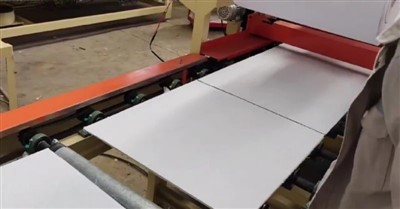

The construction process for gypsum board ceilings mainly includes single-layer and double-layer suspended ceilings. Common processes are divided into single-layer and double-layer gypsum board ceilings, with the latter offering better crack resistance. This process uses a light steel keel as the framework and paper-faced gypsum board as the panel, secured with self-tapping screws.
When installing double-layer gypsum board, the top and bottom layers must be staggered and fixed, and joints cannot be made on the same keel. A 3-5 mm gap should be left at the joints of the gypsum board, and a gap should also be left between the gypsum board and the wall or other materials to prevent cracking due to thermal expansion and contraction. The self-tapping screw heads should be recessed into the board surface and not protrude.
Irregularly shaped ceilings, such as curved or wavy shapes, have specific construction techniques.