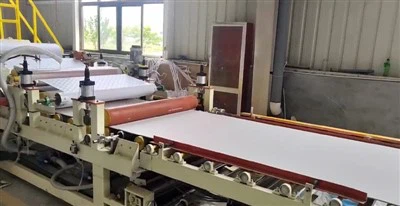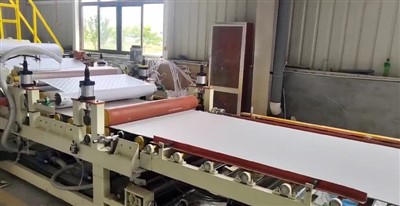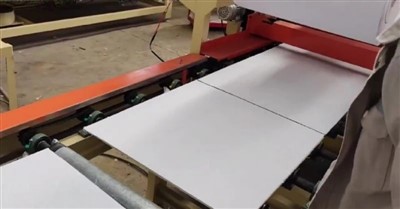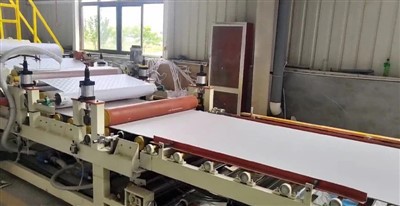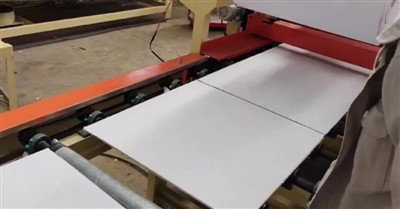


As a supplier of a PVC Laminated Gypsum Board Plant, conducting a cost - benefit analysis is crucial for making informed decisions about the business. This analysis helps in understanding the financial implications of setting up and operating the plant, and it can guide strategic planning. In this blog, I will share how to conduct a comprehensive cost - benefit analysis for a PVC Laminated Gypsum Board Plant.
1. Identify the Costs
1.1 Initial Investment Costs
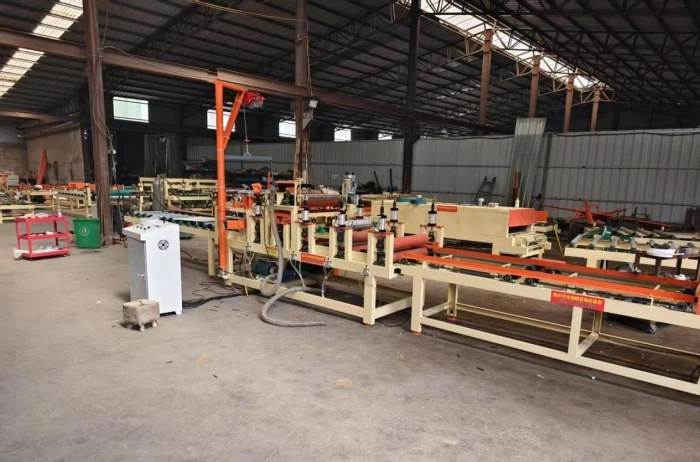
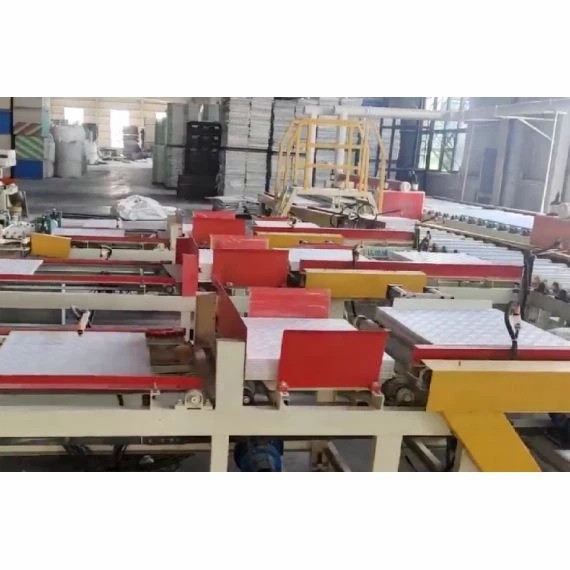
The first step in a cost - benefit analysis is to identify all the initial investment costs. This includes the cost of land, building construction, and equipment. For a PVC Laminated Gypsum Board Plant, the equipment costs are significant. You need to invest in machines such as the Automatic PVC Gypsum Ceiling Lamination Machine, which is essential for laminating PVC onto gypsum boards. Additionally, a High - Efficiency Fully Automatic Production Line can improve productivity and reduce labor costs in the long run, but it comes with a high upfront price.
The cost of land and building construction depends on the location. You need to consider factors such as proximity to raw material sources, transportation links, and local regulations. The building should be designed to accommodate the production equipment and provide a safe working environment for employees.
1.2 Operating Costs
Operating costs are the expenses incurred during the day - to - day operation of the plant. These include raw material costs, labor costs, energy costs, and maintenance costs.
Raw materials for PVC laminated gypsum boards mainly include gypsum, PVC films, and additives. The cost of these raw materials can fluctuate depending on market conditions. You need to establish long - term supply contracts with reliable suppliers to ensure a stable supply and control costs.
Labor costs are another significant operating expense. You need to hire skilled workers for various tasks such as machine operation, quality control, and maintenance. Training programs may be required to ensure that employees are competent in their jobs.
Energy costs are associated with running the production equipment, lighting, and heating or cooling the plant. You can invest in energy - efficient equipment to reduce energy consumption and lower costs. For example, using energy - efficient motors in the PVC Laminated Line for Gypsum Wallboards can lead to significant savings over time.
Maintenance costs are necessary to keep the production equipment in good working condition. Regular maintenance can prevent breakdowns and extend the lifespan of the equipment. You should budget for routine maintenance, spare parts, and occasional major overhauls.
2. Estimate the Benefits
2.1 Revenue from Sales
The primary benefit of a PVC Laminated Gypsum Board Plant is the revenue generated from selling the products. You need to estimate the market demand for PVC laminated gypsum boards and set a realistic sales price. Consider factors such as the quality of your products, competition in the market, and customer preferences.
Market research is essential to understand the demand for PVC laminated gypsum boards in different regions. You can analyze industry reports, conduct surveys, and study the trends in the construction and interior design sectors. Based on this research, you can project the sales volume and calculate the potential revenue.
2.2 Cost Savings
In addition to direct revenue, there can be cost savings associated with producing PVC laminated gypsum boards in - house. For example, if you previously purchased these boards from external suppliers, producing them in your own plant can eliminate the markup charged by the suppliers.
Moreover, by having better control over the production process, you can reduce waste and improve the quality of the products. This can lead to fewer returns and customer complaints, which in turn can save costs in the long run.
2.3 Competitive Advantage
A well - established PVC Laminated Gypsum Board Plant can give you a competitive advantage in the market. You can offer customized products, faster delivery times, and better customer service compared to your competitors. This can help you attract more customers and increase market share.
3. Calculate the Net Present Value (NPV)
To evaluate the profitability of the PVC Laminated Gypsum Board Plant over time, you need to calculate the Net Present Value (NPV). NPV takes into account the time value of money, which means that a dollar received in the future is worth less than a dollar received today.
The formula for NPV is:
[NPV=\sum_{t = 0}^{n}\frac{CF_{t}}{(1 + r)^{t}}]
where (CF_{t}) is the cash flow in period (t), (r) is the discount rate, and (n) is the number of periods.
The cash flows include both the costs and benefits. In the initial period ((t = 0)), the cash flow is negative because of the initial investment costs. In subsequent periods, the cash flow is the difference between the revenue and the operating costs.
The discount rate represents the opportunity cost of investing in the plant. It reflects the return that you could earn by investing your money in an alternative project with similar risk. A higher discount rate will result in a lower NPV, indicating that the project is less profitable.
4. Conduct a Sensitivity Analysis
A sensitivity analysis is important to assess the impact of changes in key variables on the cost - benefit analysis. Key variables include the sales volume, sales price, raw material costs, and energy costs.
For example, if the sales volume is lower than expected, how will it affect the NPV? You can calculate the NPV under different scenarios, such as a 10% decrease or increase in sales volume. This will help you understand the risk associated with the project and develop contingency plans.
Similarly, changes in raw material costs can have a significant impact on the profitability of the plant. You can analyze how the NPV changes when the cost of gypsum or PVC films increases or decreases.
5. Consider Non - Financial Factors
In addition to the financial analysis, non - financial factors should also be considered. These include environmental impact, social responsibility, and technological innovation.
A PVC Laminated Gypsum Board Plant should comply with environmental regulations. You need to invest in pollution control equipment and waste management systems to reduce the environmental impact of the production process.
Social responsibility is also important. You should provide a safe and healthy working environment for your employees, and contribute to the local community. This can enhance your company's reputation and attract more customers.
Technological innovation can help you improve the efficiency and quality of your products. For example, using a PVC Gypsum Ceiling Tiles Machine with advanced features can increase productivity and reduce costs.
6. Make a Decision
Based on the cost - benefit analysis, you can make an informed decision about whether to proceed with the PVC Laminated Gypsum Board Plant project. If the NPV is positive and the project is financially viable, it may be a good investment. However, you should also consider the non - financial factors and the results of the sensitivity analysis.
If the project is not financially viable, you may need to re - evaluate your plans. You can look for ways to reduce costs, increase revenue, or improve the efficiency of the production process. For example, you can consider using a PVC Gypsum Ceiling Production Line with PLC Control to automate the production process and reduce labor costs.
In conclusion, conducting a cost - benefit analysis for a PVC Laminated Gypsum Board Plant is a complex but essential process. It helps you understand the financial implications of the project and make informed decisions. If you are interested in purchasing equipment for your PVC Laminated Gypsum Board Plant or have any questions about the cost - benefit analysis, feel free to contact us for further discussion. We are committed to providing high - quality products and professional services to help you succeed in your business.
References
- Brealey, R. A., Myers, S. C., & Allen, F. (2020). Principles of Corporate Finance. McGraw - Hill Education.
- Horngren, C. T., Datar, S. M., & Rajan, M. V. (2018). Cost Accounting: A Managerial Emphasis. Pearson.