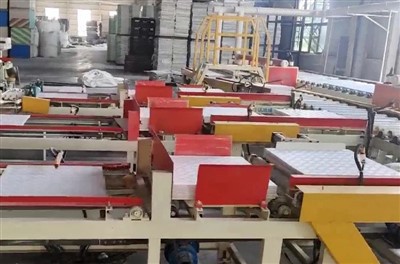


In the construction and interior decoration industry, PVC film faced gypsum tiles have gained significant popularity due to their aesthetic appeal, durability, and cost - effectiveness. As a leading supplier of PVC Film Faced Gypsum Tiles Production Line, I understand the importance of optimizing the production process to enhance efficiency, reduce costs, and improve product quality. In this blog, I will share some key strategies and techniques to optimize the production process of a PVC Film Faced Gypsum Tiles Production Line.
1. Raw Material Management
The quality of raw materials is the foundation of high - quality PVC film faced gypsum tiles. Gypsum, as the main component, should be of high purity and consistent quality. It is crucial to source gypsum from reliable suppliers and conduct regular quality inspections. The moisture content of gypsum can affect the setting time and strength of the tiles, so proper storage conditions should be maintained to prevent moisture absorption.


For the PVC film, factors such as thickness, color, and surface texture need to be carefully selected according to market demand. The film should have good adhesion to the gypsum surface to ensure long - term durability. Establishing a strict raw material inventory management system can help avoid shortages or overstocking, which can disrupt the production process.
2. Equipment Maintenance and Upgrades
Regular maintenance of the production line equipment is essential for smooth operation. This includes cleaning, lubricating, and inspecting all components of the PVC Laminated Gypsum Ceiling Tiles Machine. For example, the cutting blades need to be sharpened or replaced regularly to ensure accurate and clean cuts. The conveyor belts should be checked for wear and tear to prevent material jams.
In addition to maintenance, periodic equipment upgrades can also improve production efficiency. Newer technologies may offer better control systems, higher production speeds, and improved product quality. For instance, upgrading to an Automatic PVC Gypsum Board Laminating Machine can reduce manual labor and increase the precision of the lamination process.
3. Process Optimization
Mixing Process
The mixing of gypsum, additives, and water is a critical step in the production process. The mixing ratio should be precisely controlled to ensure the proper setting time and strength of the gypsum tiles. Over - mixing or under - mixing can lead to uneven product quality. Using advanced mixing equipment with accurate dosing systems can help achieve consistent results.
Forming Process
The forming process determines the shape and size of the gypsum tiles. The molds should be well - designed and maintained to ensure smooth and accurate forming. The pressure and temperature during the forming process also need to be carefully controlled. For example, if the pressure is too high, it may cause cracks in the tiles, while if it is too low, the tiles may not have the desired density.
Lamination Process
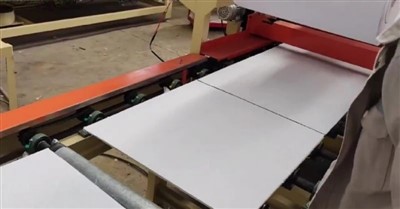
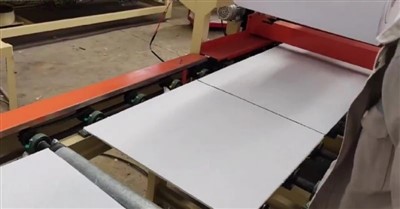
The lamination of the PVC film onto the gypsum tiles is a key step in creating the final product. The Automatic PVC Gypsum Ceiling Lamination Machine should be set up to ensure proper alignment and adhesion of the film. The temperature and pressure during lamination can affect the bonding strength between the film and the gypsum. Adjusting these parameters based on the type of PVC film and gypsum tiles can improve the lamination quality.
4. Quality Control
Implementing a comprehensive quality control system is crucial for optimizing the production process. This includes in - process inspections at each stage of production. For example, during the mixing process, samples can be taken to check the consistency of the mixture. After forming, the tiles can be inspected for dimensional accuracy and surface defects.
Final product inspections should also be carried out before packaging and shipping. This can involve testing the tiles for strength, fire resistance, and water resistance. By identifying and addressing quality issues early in the production process, the overall production efficiency can be improved, and the number of defective products can be reduced.
5. Staff Training and Development
Well - trained staff are essential for the successful operation of the production line. Providing regular training on equipment operation, process control, and quality management can improve the skills and knowledge of the employees. This can lead to more efficient production processes and fewer errors.
In addition, encouraging staff to participate in continuous improvement initiatives can foster a culture of innovation. Employees on the production line often have valuable insights into potential process improvements, and their suggestions should be taken seriously.
6. Production Planning and Scheduling
Effective production planning and scheduling can help optimize the use of resources and reduce production lead times. By analyzing market demand, production capacity, and raw material availability, a detailed production plan can be developed. This plan should include production quantities, production schedules, and resource allocation.
Scheduling the production line to run at full capacity as much as possible can improve efficiency. However, it is also important to leave some flexibility in the schedule to accommodate unexpected changes in demand or production issues.
7. Waste Management
Reducing waste is an important aspect of optimizing the production process. In the production of PVC film faced gypsum tiles, waste can occur in the form of gypsum scraps, PVC film trimmings, and defective products. Implementing a waste management system can help recycle and reuse these materials.
For example, gypsum scraps can be ground and reused in the mixing process, while PVC film trimmings can be recycled into new films. By reducing waste, the production costs can be lowered, and the environmental impact can be minimized.
Conclusion
Optimizing the production process of a PVC Film Faced Gypsum Tiles Production Line requires a comprehensive approach that includes raw material management, equipment maintenance and upgrades, process optimization, quality control, staff training, production planning, and waste management. By implementing these strategies, we can improve production efficiency, reduce costs, and produce high - quality PVC film faced gypsum tiles.
If you are interested in purchasing a PVC Film Faced Gypsum Tiles Production Line or have any questions about the production process, please feel free to contact us for further discussion. We are committed to providing you with the best solutions and support.
References
- Smith, J. (2020). "Advanced Manufacturing Processes in the Construction Industry". Publisher: Construction Press.
- Brown, A. (2019). "Quality Control in Gypsum Product Manufacturing". Journal of Building Materials, 15(3), 220 - 235.
- Green, C. (2021). "Sustainable Production Practices in the PVC Industry". Environmental Science Journal, 20(4), 310 - 325.