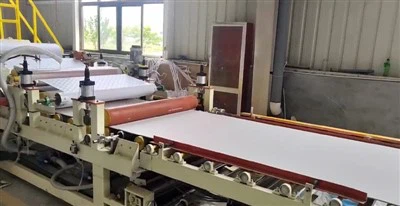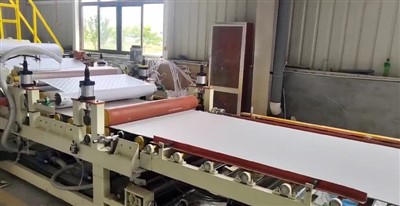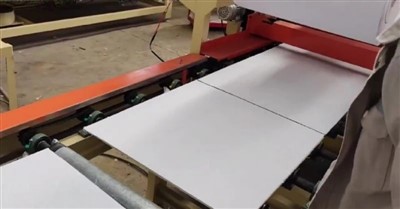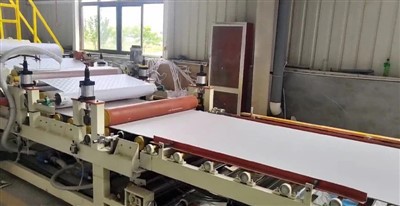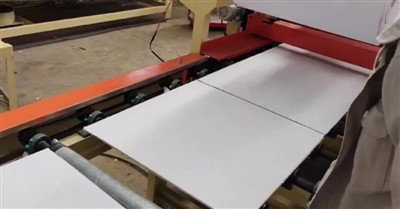


As a leading supplier of Ceiling PVC Laminated Gypsum Tile Machinery, I am often asked about the precision of the molding process of our equipment. Precision in the molding process is crucial as it directly impacts the quality, appearance, and functionality of the final ceiling tiles. In this blog post, I will delve into the various aspects that contribute to the precision of our Ceiling PVC Laminated Gypsum Tile Machinery.

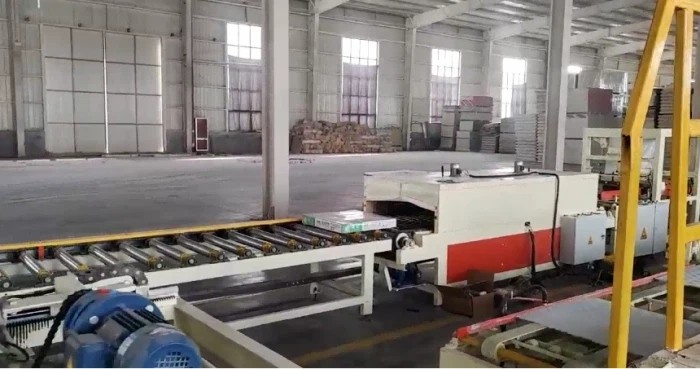
Understanding the Molding Process
The molding process of Ceiling PVC Laminated Gypsum Tile Machinery involves several key steps. First, the gypsum material is mixed with appropriate additives to achieve the desired consistency. Then, the PVC laminate is prepared, which will be bonded to the gypsum core. The mixed gypsum is then poured into a mold, and the PVC laminate is carefully placed on top. The mold is closed, and pressure and heat are applied to ensure proper bonding between the gypsum core and the PVC laminate. Finally, the molded tile is cooled and removed from the mold.
Factors Affecting Precision
Mold Design
The design of the mold is one of the most critical factors affecting the precision of the molding process. Our molds are engineered with high precision using advanced CAD/CAM technology. This ensures that the dimensions of the mold are accurate to within a very small tolerance. For example, the length, width, and thickness of the mold are designed to match the exact specifications of the ceiling tiles we aim to produce. The surface finish of the mold also plays a crucial role. A smooth and uniform mold surface will result in a ceiling tile with a high - quality finish, free from defects such as bumps or scratches.
Material Control
Precise control of the raw materials is essential for achieving a precise molding process. The gypsum powder used in our production has a consistent particle size and chemical composition. This consistency ensures that the gypsum mixture has the same properties every time, which is vital for uniform molding. The PVC laminate also needs to be of high quality and have a consistent thickness. Any variation in the material properties can lead to differences in the final tile dimensions or the quality of the lamination.
Temperature and Pressure Control
During the molding process, temperature and pressure control are key to achieving precision. Our Ceiling PVC Laminated Gypsum Tile Machinery is equipped with advanced temperature and pressure sensors and control systems. The temperature needs to be carefully regulated to ensure that the gypsum sets properly and the PVC laminate bonds well to the gypsum core. If the temperature is too high, the gypsum may dry too quickly, leading to cracks in the tile. If it is too low, the bonding between the gypsum and the PVC laminate may be weak. Similarly, the pressure applied during the molding process must be uniform across the entire mold. Uneven pressure can result in tiles with inconsistent thickness or shape.
Measuring Precision
We use a variety of methods to measure the precision of the molding process. One of the most common methods is dimensional measurement. We regularly measure the length, width, and thickness of the produced ceiling tiles using high - precision measuring tools such as calipers and micrometers. These measurements are compared to the design specifications to ensure that the tiles are within the acceptable tolerance range.
In addition to dimensional measurement, we also conduct visual inspections to check for surface defects such as scratches, bubbles, or uneven lamination. We use advanced optical inspection systems that can detect even the smallest defects on the surface of the ceiling tiles.
The Impact of Precision on Product Quality
The precision of the molding process has a direct impact on the quality of the Ceiling PVC Laminated Gypsum Tiles. Precise molding ensures that the tiles have a uniform thickness and shape, which is essential for a seamless installation. When the tiles are of consistent dimensions, they fit together perfectly, creating a smooth and professional - looking ceiling.
Moreover, a precise molding process results in a strong bond between the gypsum core and the PVC laminate. This bond enhances the durability of the tiles, making them resistant to wear and tear, as well as moisture and humidity. High - precision tiles also have a better aesthetic appeal, with a smooth and flawless surface finish.
Our Machinery and Precision
Our Ceiling PVC Laminated Gypsum Tile Machinery is designed to achieve the highest level of precision in the molding process. We continuously invest in research and development to improve the technology and performance of our equipment. Our machines are made from high - quality materials and are built to last, ensuring long - term reliability and precision.
If you are interested in our products, you can learn more about them through the following links:
- PVC Gypsum Ceiling Tile Production Equipment
- Plasterboard PVC Gypsum Lamination Line
- PVC Laminated Gypsum Ceiling Tiles Equipment — Factory Direct
- PVC Gypsum Ceiling Tile Machine
- High Speed PVC Gypsum Ceiling Tile Cutting Machine
Conclusion
In conclusion, the precision of the molding process of Ceiling PVC Laminated Gypsum Tile Machinery is determined by multiple factors, including mold design, material control, and temperature and pressure regulation. At our company, we are committed to ensuring the highest level of precision in our machinery to produce high - quality ceiling tiles. If you are in the market for Ceiling PVC Laminated Gypsum Tile Machinery, we invite you to contact us for further discussion and potential procurement. We are confident that our equipment can meet your production needs and help you achieve excellent results.
References
- Smith, J. (2018). Precision Manufacturing in the Building Materials Industry. Journal of Manufacturing Technology, 25(3), 123 - 135.
- Johnson, A. (2019). Advances in Gypsum Tile Molding Technology. Building Materials Review, 32(2), 45 - 56.
- Brown, C. (2020). Quality Control in PVC Laminated Product Manufacturing. International Journal of Quality Assurance, 18(4), 234 - 248.