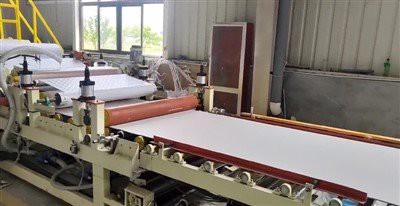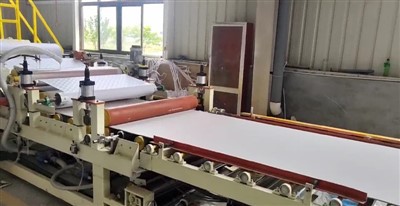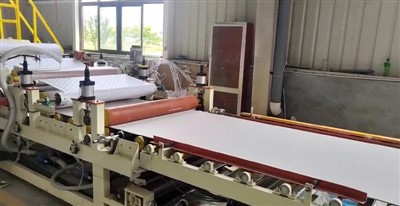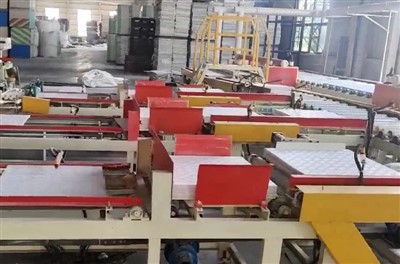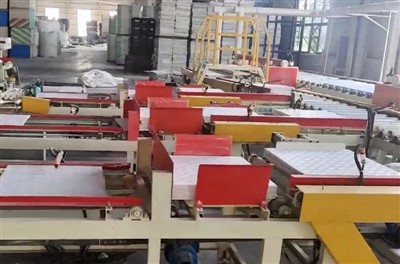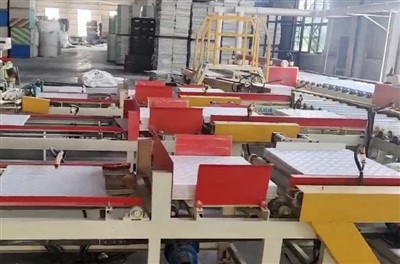

A gypsum board production line is like a precise cooking process, with each step closely linked from raw material proportioning to finished product output. It mainly consists of three stages: the raw material processing section calcines and dehydrates natural gypsum into building gypsum powder; the molding section uses a continuous belt casting machine to form the gypsum slurry between two layers of facing paper; and the drying section uses a multi-layer drying kiln to complete dehydration and shaping within 40 minutes. Each production line can produce 8-12 meters of gypsum board per minute, equivalent to processing 15 tons of gypsum raw material per hour.
Technical Highlights of the Intelligent Control System
Modern production lines are equipped with intelligent control systems that enhance production efficiency:
Automatic Batching System: Precisely controls the mixing ratio of gypsum powder and additives with an error of less than 0.5%.
Online Monitoring Device: Real-time scanning of slab thickness and automatic adjustment of roller pressure.
Heat Recovery Module: Utilizes up to 65% of the waste heat from the drying kiln, significantly reducing energy consumption.
Key Factors Affecting Production Capacity
These factors determine the true efficiency of the production line:
Raw Material Purity: Calcium sulfate dihydrate content must be greater than 85%.
Drying Temperature: The ideal range is 180-220℃.
Paper Tension: The tensile strength of the facing paper affects the finished product qualification rate.
Equipment Maintenance: Regular cleaning of the mixer can prevent 30% of downtime due to malfunctions.