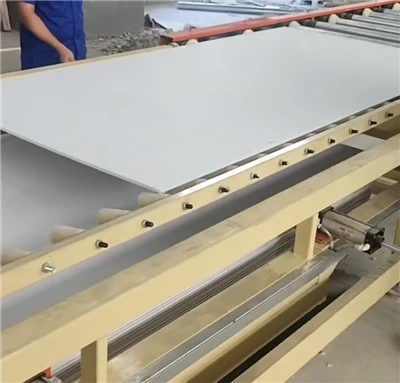

Both the core and the facing paper of this water-resistant gypsum board undergo waterproofing treatment. According to national standards, both the paper and core of the board must meet certain waterproofing requirements (surface water absorption not exceeding 160 grams, water absorption rate not exceeding 10%). Water-resistant gypsum board is suitable for use in places where the continuous relative humidity does not exceed 95%, such as bathrooms, kitchens, and shower rooms. However, it should be noted that waterproof gypsum board should not be directly exposed to damp environments, nor should it be directly soaked in water for extended periods.
Gypsum board is mainly used in engineering or home decoration. Due to its good toughness, it is suitable for making irregularly shaped ceilings, and its relatively low price makes it widely used in engineering and home decoration. Gypsum board is a secondary crystallization product; the water crystals it contains can absorb heat, giving it a certain degree of fire resistance. Furthermore, due to the use of foaming agents in its production, the internal structure of gypsum board forms a porous structure, providing sound insulation and absorption. Other materials with both fire and water resistance are also available on the market, such as calcium silicate board, FC board, and fire-resistant and moisture-resistant magnesium oxide board. Due to their inherent properties, these materials have different applications compared to gypsum board.