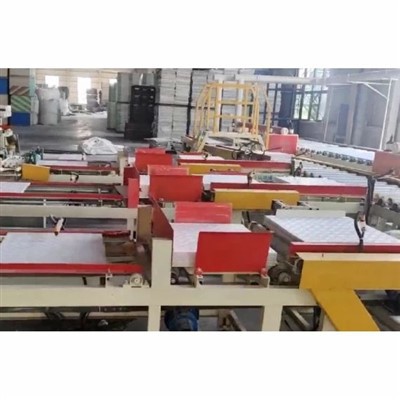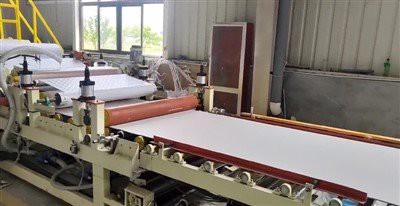

Waterproof gypsum board is made by adding a certain amount of waterproofing agent to the gypsum core material, waterproofing both the core and the facing paper to achieve a certain waterproof standard. It has advantages such as sound insulation, heat insulation, thermal insulation, fire resistance, easy installation, good workability, and low price. Its surface water absorption is ≤160g/m², and the water absorption rate is generally around 5%, making it suitable for large spaces with high humidity. However, it should be noted that its waterproofing ability is mainly against indoor moisture. If there is a leak from the floor above, the back of the board may become damp and powdery. It is recommended to apply waterproof paint to the back and leave an inspection port during installation.
Micro-perforated aluminum panels, also known as concealed grid square ceiling systems, have a flat surface, fine seams, and a simple and elegant design. They have advantages such as flame retardancy, corrosion resistance, moisture resistance, and easy disassembly and maintenance. Common sizes are 350x350mm, 600x600mm, and 600x1200mm.
PVC ceiling panels are made of polyvinyl chloride and are extruded. They have advantages such as moisture resistance, heat insulation, easy installation and cleaning, and low price. They are suitable for bathrooms where fire resistance requirements are not high. However, their durability and aesthetics are slightly inferior to aluminum ceiling panels, and they are more prone to aging and yellowing.
Aluminum alloy ceiling panels are made by stamping lightweight aluminum plates in one piece, and then spraying paint on the outer layer using a special process, or adding metals such as magnesium and manganese to enhance elasticity during the manufacturing process. They have the advantages of moisture resistance, fire resistance, sound absorption, sound insulation, antistatic properties, and dust resistance, and are currently the mainstream material for kitchen and bathroom ceilings. When purchasing, attention should be paid to the flatness of the panel surface, the quality of the paint surface, and the quality of the matching keel.
Integrated ceilings usually refer to ceiling systems that modularly integrate ceiling panels with lighting, ventilation, heating, and other electrical appliances [3]. Their panels are mostly processed by extrusion, and have the characteristics of being waterproof, moisture-proof, insect-proof, and flame-retardant. They come in a variety of colors and patterns, have a strong overall feel, and are easy to install. However, some materials may have poor high-temperature resistance, and are prone to deformation and aging under prolonged exposure to high temperatures.
Fiberglass ceilings have excellent corrosion and water resistance, making them suitable for particularly humid environments or environments with corrosive gases. They are lightweight and easy to install, but the styles are relatively limited.
Aluminum-plastic composite panels consist of high-purity aluminum alloy sheets on the top and bottom layers, with a non-toxic, low-density polyethylene core. They offer excellent fire resistance and a wide range of colors.
Mineral wool boards and ordinary gypsum boards are highly absorbent and easily become damp, moldy, deformed, and detached in high-humidity environments such as bathrooms; therefore, their use is generally not recommended.