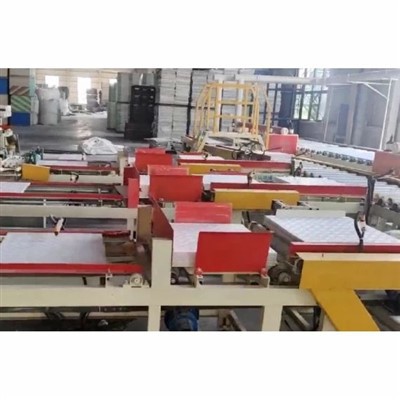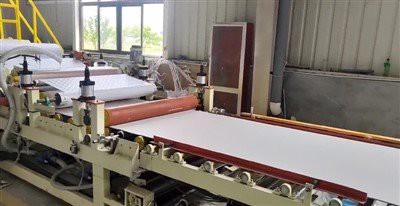

The primary structure of the equipment consists of multiple functional modules. The core configuration typically comprises a transmission system, a gluing system, a laminating and pressing system, as well as auxiliary and control systems.
Early transmission systems predominantly utilized chains and sprockets; however, modern equipment models have been upgraded to incorporate backlash-free drives or conveyor belts to ensure consistent linear speeds and the uniform transport of thin sheet materials.
The gluing system features a dedicated gluing mechanism. Certain advanced models employ two independent motors to regulate the gluing rollers-often coupled with an automatic glue-feeding function-thereby ensuring uniform glue application. Furthermore, patented technologies utilizing components such as sliders, guide rails, adjustment frames, and servo motors are employed to facilitate the precise movement and adjustment of the gluing assembly.
The laminating and pressing system encompasses paper-feeding and laminating mechanisms, hot-pressing mechanisms, cold-pressing mechanisms, and post-pressing mechanisms. In some equipment models, the pressing structure incorporates a tension-adjustable design to optimize the overall pressing effect.
The auxiliary and control systems include dust removal and suction mechanisms, glue-drying mechanisms, and automatic paper-cutting mechanisms. The entire machine typically utilizes computer programming to achieve fully digitized and automated control.